


















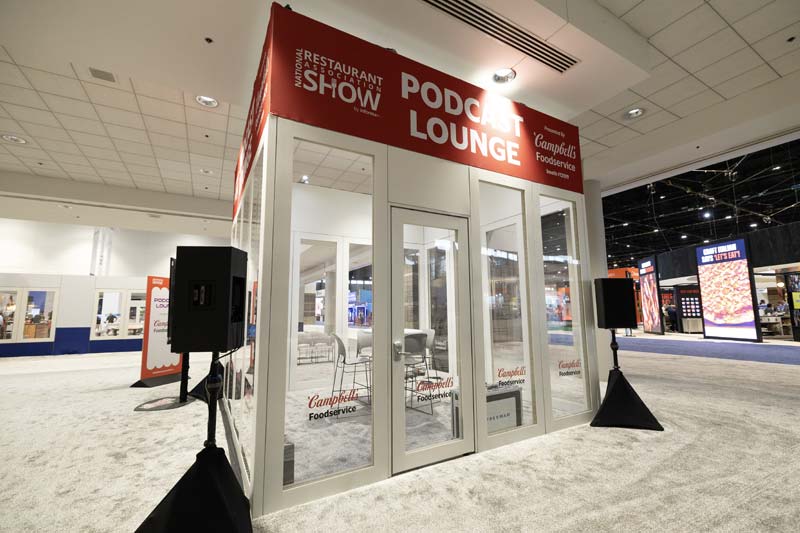
We took the NRA Show floor and turned it into a conversation. Campbell’s Culinary Corner features candid, expert-led discussions on the trends, challenges, and strategies defining foodservice today — from smarter procurement to building lasting guest loyalty. Listen to all four episodes below.
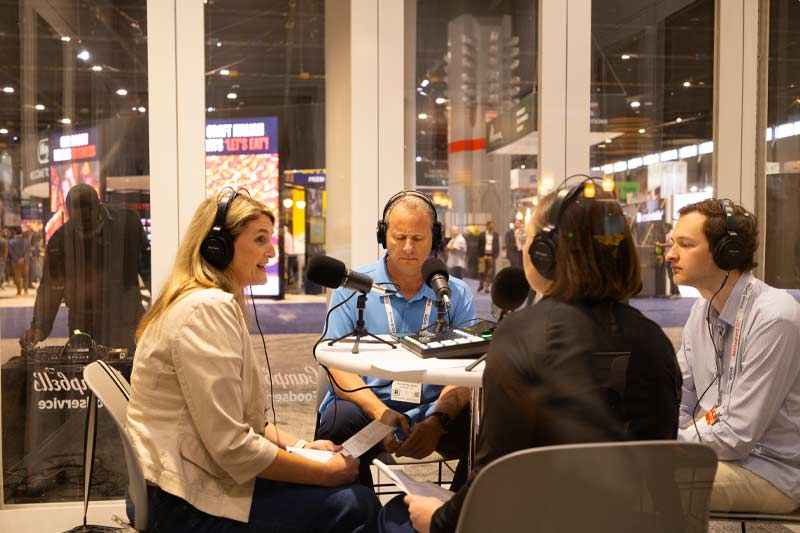

Brand Loyalty in a Fragmented, Value-Driven Market
The Human Bean’s Janie Page, Scott Anderson, and Matt Anderson reveal how the brand has built lasting customer loyalty through emotional connection, community investment, and an unwavering commitment to the guest experience.
00:00:00,500 –> 00:01:27,520 [Jenna Hagerich]
Thank you for joining live from NRA, Campbell’s Culinary Corner. I’m Jenna Hegerich, coming to you from the National Restaurant Association Show, where we’re bringing together industry experts to explore the trends, challenges, and ideas shaping the future of food service. Through these conversations, we aim to connect operators with insights and perspectives that can help inform smarter strategies for what’s next. Today, we’re joined by three leaders from The Human Bean, a brand that’s been quietly redefining what loyalty looks like in a highly competitive coffee and beverage space. We have Janie Page, chief marketing officer, who leads brand strategy, innovation, and customer engagement across the system. We have Scott Anderson, chief operating officer, who oversees operations and the franchise support center, executing across more than 200 locations. And we have Matt Anderson, director of finance and supply chain, who brings the critical lens of performance, efficiency, and system-wide economics into how the brand grows. We’re in 2026. Consumers are more selective than ever. Spending is tightening, and yet brands that have built genuine loyalty are actually gaining share. So according to Technomic, loyalty is no longer driven by just points in an app alone. It’s shaped by emotional relevance, perceived value, and frictionless experiences. And so we’re going to get into all that today.
00:01:28,580 –> 00:01:42,080 [Jenna Hagerich]
So Janie, would love to start with you. And when you look at the consumer landscape right now versus even two or three years ago, what’s the biggest behavioral shift you’re actually seeing in your own data at The Human Bean?
00:01:42,780 –> 00:02:29,920 [Janie Page]
So the biggest shift that we’re seeing is the move from routine-driven purchases versus now the intent-driven, the mood-driven purchases that we see. So lots has changed even over the last six months, especially when it comes to AI. People are not searching. They’re asking the question and getting specifics, and then getting told what to try, like, “What’s fit for your mood? I’m feeling this way today.” So it’s really driving those direct answers versus just searching a menu. It’s asking specific questions to getting those specific responses. So it’s increased customization, increased day part crossover, because we’re seeing a lot of shift into cold beverages. We have seen that in the past few years, but even more so now, and all the toppings and stuff that you can put in
00:02:31,000 –> 00:02:32,200 [Janie Page]
drinks that are cold.
00:02:32,540 –> 00:02:53,900 [Jenna Hagerich]
Yeah. Awesome. Thank you for sharing all that. And as we move forward, just want to make sure we’re actually defining loyalty, because it can mean a lot of different things to a lot of different people, right? So we’ll kind of jump in there. So, Janie, when a consumer is visiting fewer brands overall, but visiting their chosen brands more often, so basically, is loyalty about frequency or is it about something deeper?
00:02:54,540 –> 00:03:49,740 [Janie Page]
Well, frequency isn’t loyalty. It’s the result of it. So grounding yourself in your core brand pillars is really important because that’s the result of the frequency. So when you really, really enjoy or really believe in those core brand pillars, and at The Human Bean, we have four. We have community, we have integrity, doing what’s right. Community as like the foundation of our brand that differentiates us from everybody else. The experience, we call it the bean on top experience, above and beyond the norm of customer service today. People expect that experience. We’re a drive-through, and so that experience at the window is super crucial to creating that atmosphere for the employee. And then their last one is quality. I mean, quality really counts. So when you’re founded in all those things and you deliver those things, people are more loyal because they believe in the brand with those foundational principles.
00:03:50,060 –> 00:04:07,000 [Jenna Hagerich]
Yeah, absolutely. So Scott, want to pivot to you. So from a unit-level operator standpoint, what does a loyal guest actually look like? Is it the app user? Is it the person who orders the same drink every morning? Like, how do you see it on the ground actually in the operations?
00:04:07,340 –> 00:04:42,640 [Scott Anderson]
Sure. Yeah. Thank you. I mean, our loyal guests that are on the app give us a bunch of data. I mean, our guests are coming sometimes daily, sometimes twice daily, sometimes once weekly. And through the app data, we know everything about them. We know their preferences. We know what they’re ordering, when it’s a hot day, when it’s a cold day. We know if they’re coming multiple times a day. So there’s a plethora of data there, but we also don’t want to underestimate the power of our loyal guests that aren’t app users. So there are a lot of guests out there that have just had it with apps today and one more piece of technology. And
00:04:43,660 –> 00:04:45,340 [Scott Anderson]
coffee and beverage,
00:04:46,520 –> 00:04:46,860 [Scott Anderson]
it’s a specialty occasion, right? It’s a treat. It’s an indulgence. They expect a little bit different type of service. So we try to give our guests a bean on top of experience. And for us, we place a chocolate-covered espresso bean on the top of every drink. And internally, we reference that bean as going the extra mile and trying to do something nice to surprise and delight the guest, right? So we try to do that in the way we converse with the guests and the way we treat the guests.
00:05:15,220 –> 00:05:24,560 [Scott Anderson]
And for us, it’s really cool to see the guests do that back. So because of the high frequency and the high repeat and maybe the brand loyalty,
00:05:25,600 –> 00:05:38,760 [Scott Anderson]
that guest interacts with our team mostly in the way we want our team to interact in true, genuine relationships. So it’s pretty exciting. We can no longer just depend on the app user and go after them.
00:05:39,320 –> 00:05:53,280 [Jenna Hagerich]
I love that. It is truly about the human connection. So you’re really building that through maybe something that might seem small, literally, but it’s coming through your team as well as your customers. So that’s an amazing example. Thank you for sharing that.
00:05:54,920 –> 00:06:06,620 [Jenna Hagerich]
You kind of touched on this, but I guess just a quick question to close out the loyalty portion. So is there a version of loyalty that doesn’t involve a program at all, and is that actually more valuable?
00:06:07,188 –> 00:06:08,168 [Janie Page]
For me? [chuckles]
00:06:08,188 –> 00:06:09,328 [Jenna Hagerich]
Yeah. Jamie, let’s start with you.
00:06:09,348 –> 00:06:29,868 [Janie Page]
Okay. Program-based loyalty can drive behavior, but it doesn’t necessarily guarantee the preference. So, the strongest loyalty happens when customers choose you without needing an incentive. So, it goes back to those core principles. You deliver those in and out every day, you’ll get that loyalty. If you can have that bean on top experience like Scott suggested,
00:06:31,168 –> 00:06:41,168 [Janie Page]
if you deliver the quality products, if they’re well-made, there’s a smile at the window, we’re giving back locally in the community in which we serve, and we do what’s right by the customer.
00:06:41,928 –> 00:06:44,148 [Jenna Hagerich]
Got it. Scott, you have anything to add there?
00:06:44,588 –> 00:07:26,288 [Scott Anderson]
Yeah, absolutely. I mean, I’m not necessarily a young guy. I grew up in a family of QSR operators, so we have long generational history there. And I’d say in the last 18 months, there have been so many trade articles about guest sentiment and how the most successful brands right now are those that have the highest guest sentiment scores, right? And so, that’s a part of loyalty. And I think for an old school guy, you look back on that, and that’s what we were all taught as restaurant operators on day one, right? It’s all about that quality, service, and cleanliness, and the guest experience. And I’m almost reading these articles like people are surprised that the brands that are doing the best are actually delivering to the customer. And really, that’s why we’re here, right?
00:07:26,908 –> 00:08:05,328 [Jenna Hagerich]
Yeah, absolutely. I love that. All right, so let’s pivot just a little bit to marketing’s role, specifically around emotional relevance. So, we’ve talked about this a little bit already, but just more specifically, Jamie, I know you’ve been really direct about the philosophy of don’t just follow the coffee trends, right? And you all don’t follow trends. You’re literally creating them. So, just want to talk more about that. And Jamie, how do you think about ROI of a campaign that builds emotional connection versus one that might drive an immediate transaction, right? I know as a marketer, we’re always asked about return on investment-
00:08:05,348 –> 00:08:05,468 [Janie Page]
Mm-hmm. Of course
00:08:05,468 –> 00:08:19,468 [Jenna Hagerich]
… and this can be something that’s incredibly hard to measure depending on the vehicle. So, especially when you’re trying to talk to leadership about the ROI on emotional relevance, right? Would just love to hear from you about how you’re doing that and how you see that.
00:08:19,468 –> 00:08:50,108 [Janie Page]
Well, it’s not an either/or. Sometimes in our campaigns, we have multiple drinks, right? And those multiple drinks, say they’re for, one might be guaranteed or directed at a Gen Z consumer. One might be directed as our core consumer or average Joe consumer that comes in in every day. So, there’s different levers we’ll pull within a campaign that’s directed to do something that’s long-term, and sometimes it’s short-term. It might be a certain offer or a certain ingredient we bring in that really
00:08:51,428 –> 00:09:07,108 [Janie Page]
sets it apart. And so, that’s how we use different things. It’s not just a one-size-fits-all, which is really nice. And you can do that, and you have that flexibility in a beverage company that where you can have different drinks for different purposes, for different types of consumers.
00:09:07,108 –> 00:09:28,028 [Jenna Hagerich]
Got it. So Matt, let’s go to you real quick. So, on the ROI discussion specifically, so from finance and supply chain lens, any marketers out there listening, what type of advice do you have? How are you looking at marketing spend in 2026, and what are some of the metrics that actually are telling you, from your seat, what’s actually working?
00:09:28,828 –> 00:09:30,468 [Matt Anderson]
Yeah, I think it depends on what we’re doing,
00:09:31,528 –> 00:09:33,368 [Matt Anderson]
but we’re looking at what did we run, where did we spend the money. We’re looking at, from that campaign, has it increased our transactions?
00:09:43,808 –> 00:09:50,308 [Matt Anderson]
Were we looking at increasing frequency for our customers? Was that specific to a day part?
00:09:51,348 –> 00:10:03,488 [Matt Anderson]
Maybe we targeted the afternoon and we’re trying to get customers to come back. Maybe we were introducing our customers to a new modifier upsell too. So it really depends on what the campaign was.
00:10:03,628 –> 00:10:04,128 [Jenna Hagerich]
Gotcha.
00:10:05,688 –> 00:10:19,268 [Jenna Hagerich]
So Jamie, let’s just go back to you. We talked a little bit about this already, but there’s a lot of tension that can be created between staying consistent to your brand, but then also feeling the pressure to constantly innovate.
00:10:19,528 –> 00:10:20,888 [Janie Page]
Yeah, that’s a great question.
00:10:20,968 –> 00:10:29,248 [Jenna Hagerich]
Yeah. So, how do you manage that as a human being without causing brand fatigue or feel like you’re straying too far away from who you are as a brand?
00:10:29,648 –> 00:10:59,048 [Janie Page]
It’s only tension if innovation drifts from who we are. So we look at that, we look through that lens with every drink that we do. The best example of us launching an innovation that was really close to the brand was our Bright Energy, which has done phenomenal. We stay true to who we are. We are a coffee-forward company, and our Bright Energy caffeine is actually sourced from green coffee beans. So it tied back to who we are. We can still continue to tell that coffee story, but also through energy drinks that are
00:11:00,168 –> 00:11:11,968 [Janie Page]
really growing in popularity. So, that’s just one example, but we try to do that through every drink that we have. Is this right for the Human Bean brand? Does this belong in our four core pillars of who we are?
00:11:12,388 –> 00:11:20,368 [Jenna Hagerich]
Got it. Yeah. I love that answer. It’s like you can innovate all you want, but if it takes you far from who you actually are, what’s left at the end of the day?
00:11:20,408 –> 00:11:20,448 [Janie Page]
Mm-hmm.
00:11:20,448 –> 00:11:21,868 [Jenna Hagerich]
So, absolutely.
00:11:23,328 –> 00:11:42,568 [Jenna Hagerich]
So Scott, want to go back to you, specifically around the in-store experience and how operations can really be a loyalty tool driver. So, for example, the drive-through is a unique challenge, right? You have about 90 seconds with a customer. So, how do you build loyalty in that quick of a transaction?
00:11:43,208 –> 00:11:44,288 [Scott Anderson]
Yeah, great question. I mean,
00:11:45,728 –> 00:12:13,128 [Scott Anderson]
in the drive-through business, you have such limited time, right? So, we deploy our teams to be outside with the guest in that drive-through queue. Obviously, that can help expedite the service experience by getting the order and the products into the kitchen per se, so the team could get a jump and speed up that drive-through lane. But most importantly, it’s that guest interaction. I talked earlier about no surprise, a good quality service and cleanliness. The result is great results.
00:12:13,128 –> 00:12:56,628 [Scott Anderson]
Unlike many restaurants, we have more of a loyalty to our brand for that consumer. And what I mean by that is when you find your coffee place, you know, I know there’s one down the hall, but when you find your coffee place, that’s your coffee place. When I’m going for lunch, it’s more impulsive. I’m driving down the road, do I want a hamburger today, a chicken today, a taco today? And I’m probably not going to go to the same place every day. Our business, we’re fortunate enough if we can just create that bond with the guest, we can generate more frequency just by that experience. Because I don’t know many people that are going to one coffee shop on Monday, a different one on Tuesday. It just becomes a part of your routine. And so that interaction that we have, while it’s so limited, it’s so important.
00:12:56,688 –> 00:13:03,728 [Jenna Hagerich]
Yeah, absolutely. Not only does it become part of a routine, I feel like beverage is unique in that it’s like, it almost becomes part of your personality, right?
00:13:03,728 –> 00:13:04,388 [Janie Page]
Your mood.
00:13:04,388 –> 00:13:11,568 [Jenna Hagerich]
Yeah, your mood. Like, where you get your coffee from tells a lot about who you are as a human. So, you all are doing amazing stuff.
00:13:12,668 –> 00:13:26,948 [Jenna Hagerich]
So speaking of that, The Human Bean has built a reputation across its locations for your friendly baristas and high-quality coffee. As you talked about, the happy human beings, that ethos is really embedded in how the brand defines its service identity.
00:13:28,248 –> 00:13:45,908 [Jenna Hagerich]
So Scott, like consistency, like how do you drive that type of an experience consistently across over 200 locations? And I know a lot of them are franchised, so how do you build this culture that holds at the unit level when the brand doesn’t control every single hire?
00:13:46,588 –> 00:13:53,328 [Scott Anderson]
Well, I’ve been in franchising for a long time. I’ll tell you, it’s not easy, but our franchise partners are our biggest secret weapon, right?
00:13:54,508 –> 00:13:57,268 [Scott Anderson]
They operate really well. I’d say on the backside,
00:13:58,608 –> 00:14:07,608 [Scott Anderson]
being privately held, we have an opportunity to kind of approve candidates at our own pace. And we don’t have the pressures that publicly traded and
00:14:08,628 –> 00:14:40,668 [Scott Anderson]
PE companies have for pushing that growth pedal super fast. So we can be selective, but we also have a really amazing ops services and operations team. The average tenure of our field operations managers, which are really responsible for that consistency throughout the marketplace, is about 15 years. So that is really our secret weapons, the franchise partners and then the op services team and the programs that they build and just being out there in the markets to establish our processes.
00:14:41,008 –> 00:14:52,088 [Jenna Hagerich]
Yeah. Wow, 15 plus years. That’s incredible, especially in like service operations. So certainly doing something right, and completely agree that that’s a secret weapon. Absolutely.
00:14:53,288 –> 00:14:58,448 [Jenna Hagerich]
So what’s the one in-store moment that you believe drives a second visit more than anything else?
00:15:00,028 –> 00:15:05,308 [Scott Anderson]
It’s really that one-on-one time that the guest and the baristas are spending together.
00:15:07,108 –> 00:15:52,968 [Scott Anderson]
I think of the Christmas cards and the hundreds of dollars of Christmas bonus that sometimes people get. I think it’s almost like my wife and her hairstylist, they create a bond. Like, people are coming through the drive-through with average window times in maybe the 40, 50-second range, but our teams know all about their life. They know where they work. They know their children’s names. We get countless thank you letters of people that have delivered their parents’ favorite products in hospice. I mean, it’s so touching, the bond that’s created. It’s definitely that emotional connection and that one-on-one experience. And because of the higher frequency in coffee and what we do, we just get to know that guest so much better than in other concepts that I’ve run.
00:15:53,688 –> 00:16:06,748 [Jenna Hagerich]
Yeah, absolutely. Really becoming part of your customers’ lives, literally. [chuckles] So, all right, Jeannie, I guess want to go back to you around how does marketing and operations really come together?
00:16:07,868 –> 00:16:16,248 [Jenna Hagerich]
So how do you connect what’s happening in the drive-through lane or in the operation to your marketing strategy? Like, what’s that feedback loop look like?
00:16:16,308 –> 00:17:38,988 [Janie Page]
Yeah, without operations and our baristas, marketing is nothing. So it all starts with leadership. So Scott, I actually report to the COO. We have a great partnership, and it starts there. But even further down, the VP of operations is one of my best friends, so we talk all the time. Communication’s key, and we’ve known each other for 10 years. We’re very direct and upfront, and so I think that’s huge with marketing and operations, first of all, because she knows what’s going on. But also, I would say it’s a lot of planning. So I believe in true annual planning systems. Does it always work out perfectly? No. There’s always pivots in the plan, but the earlier you plan, the more you can communicate with operations, the bigger success it’ll be. And that’s just not with operations, but supply chain, making sure that everything is prepared for the campaign so we have the best launch possible. So the planning, and then we also have structured meetings, of course, with cross-functional departments to make sure there’s open communication. And so that’s really beneficial and not always the case when you’re working in a corporate environment. So I’m very, very thankful for the friendships, but also the commitment to doing what’s right and voicing any type of issues. And we just deal with them together, not in silos. And so I feel very blessed about that.
00:17:39,528 –> 00:17:42,748 [Jenna Hagerich]
Yeah, that’s amazing. At Campbell’s, we call it care with candor.
00:17:42,828 –> 00:17:43,088 [Janie Page]
Oh.
00:17:43,088 –> 00:17:45,448 [Jenna Hagerich]
So it’s knowing that everyone is coming from-
00:17:45,568 –> 00:17:46,048 [Janie Page]
A good place
00:17:46,048 –> 00:17:47,028 [Jenna Hagerich]
… a good place, right?
00:17:47,048 –> 00:17:47,248 [Janie Page]
Absolutely.
00:17:47,248 –> 00:17:51,668 [Jenna Hagerich]
Sometimes we have to have those tough conversations, but we’re all doing it from a place of care, so.
00:17:51,748 –> 00:17:58,828 [Janie Page]
Absolutely. We’re there to support each other, and there’s no side conversations, and I’m very, very thankful for that.
00:17:58,888 –> 00:18:01,248 [Jenna Hagerich]
Yeah, that alignment is absolutely key.
00:18:02,188 –> 00:18:02,288 [Janie Page]
Key.
00:18:02,308 –> 00:18:36,008 [Jenna Hagerich]
So Matt, you’re not off the hook. We’re going to pivot. [laughing] We’re going to talk data. You can’t talk loyalty without data and digital and connecting all those dots. So the data challenge being app behavior, you’ve got point of sale data, you’ve got social engagement data. Like, how do you make sense of all of this? So yeah, Matt, just directly to you. You’re sitting across all this different data. You’re even looking at supply chain signals all at once. What’s a piece of data that has surprised you and that’s changed how you’ve thought about your guests’ behavior?
00:18:36,832 –> 00:18:50,432 [Matt Anderson]
Yeah. We definitely get a lot of data. I think one of the most surprising things that we’ve seen is looking at credit card tip rates. And so, each location is earning tips.
00:18:52,052 –> 00:19:01,272 [Matt Anderson]
We’ve looked at credit card tips versus credit card purchases, and we’ve seen sometimes a variation in the tip rate between locations.
00:19:03,552 –> 00:19:07,832 [Matt Anderson]
Stores with a really high tip rate, they’re probably turning the tablet around and
00:19:08,892 –> 00:19:21,872 [Matt Anderson]
maybe asking a little bit more directly for a tip. And we really have seen a correlation with those stores with the higher tip rates having lower sales. And so I think the guest wants to tip.
00:19:23,012 –> 00:19:28,332 [Matt Anderson]
I think the guest doesn’t want to feel pressured to tip. And so that’s just been an interesting thing that we’ve noticed.
00:19:28,532 –> 00:19:36,252 [Jenna Hagerich]
Yeah, that is super interesting. I actually never thought about that till right now, how just that slip is probably going to drive that actual behavior. But-
00:19:37,572 –> 00:19:37,572 [Matt Anderson]
Right
00:19:37,572 –> 00:19:49,592 [Jenna Hagerich]
… yeah, that’s awesome. Thanks for sharing that. So, I guess back to you, Matt. How do you know when a loyalty program is actually driving incremental visits versus just rewarding people who would have come anyway?
00:19:50,552 –> 00:19:55,832 [Matt Anderson]
Yeah. We do a couple things on our app that makes that very apparent to us.
00:19:57,092 –> 00:20:28,632 [Matt Anderson]
Whether it’s a specific offer to a certain day part, we’ll see growth in the afternoon sales if that’s what we’re targeting. We’re seeing customers return again that day, so we’re seeing a shift in customer behavior. We also do a program called Double Beans Wednesdays, and we’re seeing more frequency on Wednesdays. So we know that customers aren’t skipping Tuesday to come in on Wednesday. They’re really adding another day into their routine.
00:20:30,012 –> 00:20:52,992 [Matt Anderson]
I think beyond that, we really use the app not only as a loyalty platform, but as a platform to communicate to our customers. And so whether we’re sharing details about current LTOs, current beverages we’re featuring, or maybe our giveback days, we see it as a really good tool to drive awareness with what we’re doing.
00:20:52,992 –> 00:21:10,252 [Jenna Hagerich]
Great. So Jamie, we’ll come back to you again on the alignments. We talked about how you partner with the ops teams, but how do you connect your marketing data to what Matt is seeing on the financial side and the data-driven side? Is there a moment where the numbers and the brand narrative actually diverged, and what did you do about it?
00:21:10,632 –> 00:22:41,912 [Janie Page]
Yeah, so alignment on timelines and expectations with finance is really key. A lot of times we’ll test things so that we can try to project it, but sometimes those tests don’t happen the same season, so that makes it a little bit harder. But some things we go in a little blind because we’ve never introduced it before, and that’s true innovation because it’s just not something that we can predict. We try our best to, but we don’t have a crystal ball for that. But not every marketing initiative is designed to drive immediate revenue. Some of it has a longer term play, and it just depends. It takes a while for the consumer to even know what’s going on and know the campaign, especially that new consumer that may not be in the drive-through. Of course, our loyalist will know, “Oh, they’re switched campaign.” But to try to reach a new consumer with a new campaign and a new beverage, that does take time, and you kind of have to continuously push for that. And it’s more of a longer term play versus we change a flavor and build a latte that’s a little bit different than a brand new drink with a lot more complexity. So we have to be very mindful of that, and Matt is in a lot of forecasting and things like that. So, there’s definitely those moments in the financial data where we miss it, but there’s a lot of moments that we make it. So it’s just definitely a blend and setting the expectation as we go into it, knowing together that this is a guess. So a lot of that in the recent years with a lot of innovation.
00:22:42,832 –> 00:22:50,032 [Jenna Hagerich]
Yeah, I think that test and learn mentality too, and being on the same page with that going into a new campaign is really critical, so-
00:22:50,092 –> 00:22:50,552 [Janie Page]
Right
00:22:50,552 –> 00:23:34,272 [Jenna Hagerich]
… absolutely. All right, now we’re going to talk community and how that is part of the brand. I know we talked about it a little bit in the beginning, but to circle back there. So The Human Bean does some amazing work. I know I read about your Earth Day giveback and how that resulted in over 213,000 trees being planted. You also do work with St. Jude and do giveback days there as well. So, Jamie, clearly community giveback has become a structural part of how The Human Bean operates. Just want to hear more from you around, is that a brand strategy? Is it a value statement or both? And how do you measure that as part of how you look at loyalty overall?
00:23:34,612 –> 00:24:43,952 [Janie Page]
It is absolutely part of our brand pillar. Core value is community. It started 20 years ago, 20 plus years ago with Coffee for a Cure, which we give back 100% of food and beverage that day to local breast cancer organizations. That’s when it started. But when a franchise partner signs up, they know about our four givebacks. There’s a lot of companies out there that have one, maybe two givebacks. We have four. It’s a commitment that they sign up for because they care so much about the community, and that’s really the part of the human connection, right? That’s our name. It’s part of who we are. It’s our DNA. And we want to give back and serve the local communities. And a lot of people ask me about Trees for the Future. That translates right back to coffee origin. It’s not trees in Oregon, it’s trees at coffee growing regions. And so that’s important to the quality in coffee which we serve, and we’re a specialty coffee brand. And so that’s a really important foundation about giving back to those coffee growing regions and the coffee farmers to make sure there’s sustainability in where we’re sourcing our coffee.
00:24:45,880 –> 00:25:00,600 [Jenna Hagerich]
So, Scott, um, at the franchisee level, how much autonomy does a local operator have to build community presence in their own market, um, and does that local variation, um, strengthen things, or does it sometimes just complicate things?
00:25:01,480 –> 00:26:09,820 [Scott Anderson]
Well, you know, community being one of our four main pillars, um, and our franchisees being local to their communities, um, that’s, that’s hugely important. And so while we do have focus on the four main givebacks, um, we advocate more community connection. We advocate more community givebacks. Um, and I guess unlike some, I guess, larger brands or corporately held brands where there are a lot more restraints, kind of enable our franchise partners to go out and get involved in their community and do the things that they need to do. In fact, in Pasadena, Maryland today, they’re doing, uh, a local event that they do annually with a local animal shelter, and, uh, they have huge success and a lot of people come out. I can’t… They, they adopt dozens of pets that day on behalf of this community organization, get a lot of extra sales, um, and a lot of, a lot of PR and a lot of feel-good. And it’s actually genuine. The franchise partner in that area is, is one of the greatest guys you’d ever meet and really cares about giving back. And that’s the franchisee that we want. We wanna, you know, we wanna make the guest’s day, we wanna make the franchisee’s day, we wanna make the community’s day.
00:26:10,640 –> 00:26:10,820 [Janie Page]
And that’s-
00:26:10,840 –> 00:26:10,920 [Jenna Hagerich]
Yeah
00:26:10,920 –> 00:26:18,860 [Janie Page]
… above and beyond the four that they, they’re committed to do. So it’s, it’s amazing how further they go into the community to give back.
00:26:19,580 –> 00:26:46,220 [Jenna Hagerich]
Yeah, I think that embedding into the, the actual local communities, to your point, versus, like, some of, you know, maybe these larger ones on a national level, but they’re actually able to, like, keep it true to the local community, um, that’s really amazing. All right, so now we’re gonna go to some rapid fire questions. Um, so Janie, we’ll start with you. How do you balance national brand consistency with letting local franchisees feel like it’s their business?
00:26:46,920 –> 00:27:24,440 [Janie Page]
It’s definitely a balance. Um, the couple ways that we do that is we have a secret menu, and so that allows the franchise partner the flexibility to leverage different drink creations, different flavors, regional flavors, um, within the, within our portfolio. Um, they’re all following the re- recipes, and if they go from one stand to the other stand, they know how to make those drinks. But it gives that franchise partner flexibility to promote some locally favorite drinks. Um, so that’s one of the ways that we do it. Also, the flexibility to do a lot of the community events and things like that, um, we pro- we provide as well.
00:27:25,200 –> 00:27:30,560 [Jenna Hagerich]
What’s one of your favorite or most interesting of the local drinks from the secret menu?
00:27:30,780 –> 00:27:35,820 [Janie Page]
I like the Coco Cabana. It’s very good. It’s a, um, cold brew, and it’s delicious.
00:27:36,220 –> 00:27:38,360 [Jenna Hagerich]
Yay. Now I want a cold brew.
00:27:38,380 –> 00:27:38,720 [Janie Page]
There you go.
00:27:38,740 –> 00:27:47,760 [Jenna Hagerich]
All right. All right, Scott, to you. What’s the biggest mistake you see brands make when they try to compete on value in a downspending environment?
00:27:47,820 –> 00:28:30,700 [Scott Anderson]
Yeah, I think probably the biggest mistake in, you know, certainly for folks that, um, are maybe more in the premium brand space or specialty space, or maybe not, but is when value overtakes quality, whether that’s the quality of the product, the quality in the service experience. Um, you know, I, I spent a couple decades in, in the hamburger QSR segment, and it’s not the same business today as it once was. And, you know, in, in my mind, um, you can’t let value get the best of you. You… Value can, can eat away at your quality if you don’t do it well. Value can eat away at the guest experience if, if that’s all you focus on. So I, I think that’s probably the biggest watch-out.
00:28:31,180 –> 00:28:35,240 [Jenna Hagerich]
All right, Matt, one metric every food and beverage brand should be tracking.
00:28:36,160 –> 00:29:16,640 [Matt Anderson]
Yeah, I, I think most of the brands are, are, you know, tracking the, the basic stuff. One of the things that I find interesting to look at is, um, through our loyalty program, looking at our status tiers, so our platinum, gold, and silver, um, it’s interesting to track guest frequency between the loyalty tiers and between the locations. Um, about half of our, our platinum users are visiting our locations each week, but if you drill that down into specific locations, um, you can see, you know, some customers that are visiting twice daily. Um, so it’s just interesting to look at the differences in frequency.
00:29:16,640 –> 00:29:25,020 [Scott Anderson]
I think no one wants me to tell anyone how many thousands or tens of thousands of dollars some of our most loyal [laughing] consumers spend. I often wonder-
00:29:25,420 –> 00:29:26,080 [Janie Page]
I’m one
00:29:26,080 –> 00:29:33,880 [Scott Anderson]
… if the, if the spouse sees the credit card receipts. But, uh, yeah, we’ve got, we’ve got a lot of the people that, uh, give us a lot of data that’s interesting.
00:29:34,400 –> 00:29:52,840 [Jenna Hagerich]
All right. Well, before we close, I just wanna end with gratitude for all of you for spending this time with me. Um, we really appreciate it. Thank you so much for sharing your insights and, um, really contributing to this conversation. I think operators are gonna get a ton of value just spending some time listening to you all. Um, so thank you again. We really appreciate it.
00:29:53,540 –> 00:29:54,360 [Janie Page]
Thank you.
00:29:54,420 –> 00:29:55,860 [Scott Anderson]
Yeah, thank you so much for the partnership.
00:29:56,100 –> 00:29:56,720 [Matt Anderson]
Yeah, thank you.
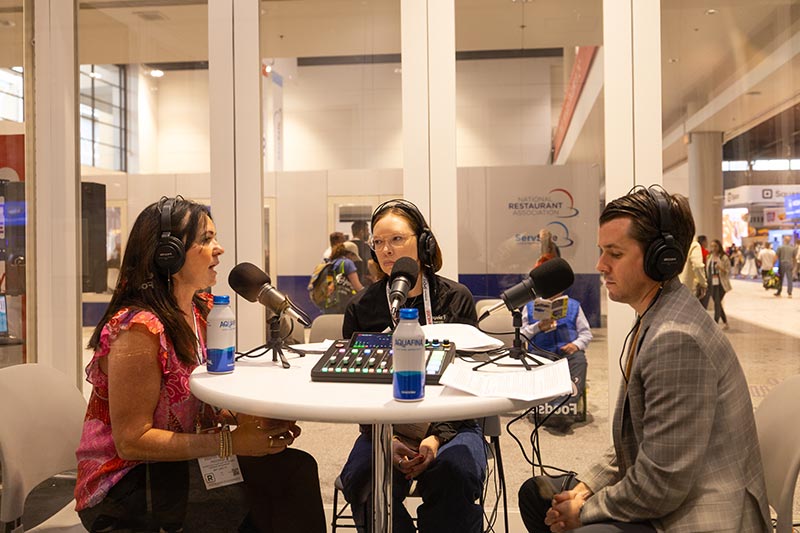
Technology + Human Expertise: The Hybrid Model Winning in Procurement
Kristen Brooks and Ryan Cox of Buyers Edge Platform discuss how leading foodservice operators are combining powerful analytics with experienced human guidance to build smarter, more strategic supply chains.
00:00:00,440 –> 00:01:36,900 [Jenna Hagerich]
Thank you for joining Live from NRA, Campbell’s Culinary Corner. I’m Jenna Hagerich, coming to you from the National Restaurant Association Show, where we’re bringing together industry experts to explore the trends, challenges, and ideas shaping the future of food service. Through these conversations, we aim to connect operators with insights and perspectives that can help inform a smarter strategy for what’s next. Today, we’re joined by two leaders from FoodBuy, a thirty-five billion dollar plus group purchasing organization that sits at the intersection of culinary strategy and procurement intelligence. We have Chef Simon Seitz, Senior Culinary Consultant, who helps operators translate menu strategy into real-world execution through chef-led insights, innovation, and practical culinary solutions. And we have Tom Marlow, Senior Director of Culinary Solutions, who works across FoodBuy’s large-scale member channels, FoodBuy Food Service and Hospitality, to align purchasing strategy, data, and menu planning with operational realities and financial performance. Together, they represent a unique model in food service, where culinary creativity meets procurement scale and data-driven decision-making. All right, so we know in this macro environment for food service, volatility is now the baseline. Everything from labor challenges to supply chain unpredictability and shifting guest expectations are defining menu planning in 2026. So Tom, when you look at food service landscape today, what’s fundamentally changed about how operators need to think about menu planning?
00:01:37,440 –> 00:01:39,900 [Tom Marlow]
Well, Jenna, first, that was a very good introduction.
00:01:39,960 –> 00:01:40,800 [Simon Seitz]
Yeah, seriously. Thank you.
00:01:40,800 –> 00:02:32,020 [Tom Marlow]
I didn’t feel nervous before, but now I’m a little nervous. There’s no secret that there’s been a lot of change. So you have to look at the inflationary times, you have to look at budgets, you have to look at different cost structures that are driving value to all the different various members that we’re helping, and then you have to look at how they’ve structured some of those things. So product rationalization, really thoughtful menu pricing and ideology to actually drive, one, the procurement program, but then two, bring that to the real life in an operator’s lens. And I think there’s just been a lot more pressure on that, probably post-COVID into the current time, of understanding the complexities of what it takes to actually run an operation, and then how you actually menu and make money from, from all the hard work that you’re doing. From that lens, there’s just a tremendous amount of change that, you know, we’re trying to constantly align to.
00:02:32,680 –> 00:02:37,760 [Simon Seitz]
Yeah, it’s almost like we had one strategy before the pandemic, and now it’s, it’s almost like we have a new business.
00:02:38,420 –> 00:03:26,640 [Tom Marlow]
Yeah, and it’s hard not to get stuck into, like, what it was before or where it is now. And so I think that’s the other thing that’s changed, is just the thoughtfulness that you have to take into consideration when you’re looking at menus and pricing and the thought behind actually driving some different things. And we take a lot of different approaches to that. So we look at a- an interesting lens to be able to drive that forward, one, from a price concept or what’s actually performing well on a menu. I think there’s so much information either that FoodBuy provides or that operators generally have in their back pocket, and I think they’re getting smarter to leverage those things. And so being able to figure out how an item should be on a menu and drive that menu pricing is actually driving a lot more value. And maybe you don’t have twenty or twenty-five different things on a menu.
00:03:26,840 –> 00:03:27,120 [Jenna Hagerich]
Mm-hmm.
00:03:27,500 –> 00:03:35,940 [Tom Marlow]
Maybe it’s twelve or fifteen, but you’re doing those things really, really well, and you’re driving better margins to the bottom line, and I think that that’s just become a lot more important.
00:03:35,980 –> 00:03:57,600 [Jenna Hagerich]
Great. Thanks for sharing that, both of you. Um, I can imagine, you know, in my role, I try to think about the operator all the time, and I can imagine that, um, with all these pressures that we just talked about, there’s a lot to think about and a lot to balance for them every day. So what pressures would you say are most acute right now? Uh, cost, labor, or supply stability?
00:03:58,380 –> 00:04:01,640 [Simon Seitz]
I’d definitely say labor. Like, it’s becoming, uh,
00:04:02,720 –> 00:04:06,340 [Simon Seitz]
across all food service, healthcare, whatever, anything involving food,
00:04:07,860 –> 00:04:23,560 [Simon Seitz]
people got an opportunity to decide if they wanted to do something different during the pandemic. A lot of them have. So it’s about how do we get smarter? How do we get more strategic on what we’re gonna have? And maybe we don’t want someone spending all their time doing this. We need them to do that. It’s not about eliminating. It’s about, uh, can we reallocate that?
00:04:23,980 –> 00:05:04,240 [Tom Marlow]
And I think you see that more now being at this show than you’ve seen in years past, is what steps are manufacturers, suppliers taking out to actually add better quality, more availability? A couple years ago, it was like speed scratch, but now it’s everybody’s doing it. And even the best of the best have to drive into programs that maybe they used to do certain things before, sous vide, or now they’re using cuisine solutions, or, you know, they’re driving these, these products to be able to be utilized without that stress of the labor, because it’s probably the most unreliable. Maybe instead of your truck being late, it’s who’s gonna show up.
00:05:04,340 –> 00:05:04,660 [Jenna Hagerich]
Mm-hmm.
00:05:04,780 –> 00:05:25,520 [Tom Marlow]
So they have– we have to think about that, and we have to think about those types of solutions when we’re actually working towards the solution. Because again, like you said, you have to put that operator in that lens, and you have to make sure that whatever you’re doing, you’re actually helping them be more efficient, more powerful, and a better executor at the end of the day.
00:05:26,100 –> 00:05:30,120 [Jenna Hagerich]
If I may, maybe a few years ago, operators were making soup from scratch.
00:05:30,400 –> 00:05:30,880 [Tom Marlow]
Exactly.
00:05:31,020 –> 00:05:34,020 [Jenna Hagerich]
However, they might need a speed scratch solution.
00:05:34,580 –> 00:05:34,660 [Tom Marlow]
Yeah.
00:05:34,700 –> 00:05:48,140 [Jenna Hagerich]
Perhaps a, a soup that is made by chefs for chefs that comes in a four-pound pouch, high quality, easy to bake, gonna drive your average check. Maybe there’s over sixty varieties. I don’t know.
00:05:48,180 –> 00:05:48,280 [Tom Marlow]
Yeah.
00:05:48,280 –> 00:05:48,660 [Jenna Hagerich]
Just saying.
00:05:49,080 –> 00:05:49,280 [Tom Marlow]
Could be-
00:05:49,320 –> 00:05:49,720 [Jenna Hagerich]
Just saying.
00:05:49,720 –> 00:05:53,840 [Tom Marlow]
Could be a simple thing to think about, for sure. Good little, little pitch there.
00:05:53,840 –> 00:05:58,460 [Jenna Hagerich]
[laughs] Um, where do you all still see outdated menu planning mindsets?
00:05:59,200 –> 00:06:30,132 [Simon Seitz]
I think it’s you’re seeing that kind of everywhere. Like T- to Tom’s point, like, don’t do sixteen things, do ten. Maybe I’ve even seen some pre-pan-pandemic, and you’ve had cook-to-order temps on burgers. Now you’ve got, like, two, two-ounce smash patties that you’re not taking temp anymore. So things like that. Or your menu mix, you know, you pay attention to the market. You know, we know this might be going up or this is gonna become something that we’re gonna have as a supply chain issue on. Pay attention to that. Don’t have four of those type of things on your, on your menu.
00:06:31,152 –> 00:06:51,472 [Jenna Hagerich]
Now I wanna talk through the new definition of purchasing strategy. So we know that modern purchasing strategies, and by extension menus, are no longer just culinary expressions. They’re operational frameworks built for resilience. So, Simon, uh, what does a high-performing purchasing strategy actually mean today in an evolving food service market?
00:06:52,532 –> 00:07:24,692 [Simon Seitz]
It’s a great question. I think it starts with what we were talking earlier about are you thinking holistically about your operation? Do you have labor? Do you have the storage? Do you have the people to do the prep work? And also take into thought that the role of the chef used to be, well, we want this person cooking, where now they’re the engine that drives the business. They’re the, the last guard before something goes out. They’re the first guard when something come- comes in. So we’re asking our chefs not only to cook but be– to, but to run the businesses as well. I think that’s a, a huge thing we have to understand and a huge way we have to think about any, any food service, whoever do it.
00:07:25,472 –> 00:07:39,352 [Jenna Hagerich]
Can you tell me a little more about, like, menu engineering itself? And I know you mentioned chefs are being asked to do more, so how has the role of that chef changed, and how do they have to look at menu design to help support the operation?
00:07:39,952 –> 00:08:12,652 [Simon Seitz]
Well, I think the easiest thing is, you know, come to Foodbuy. Work, work, work, work with us. So that, the shameless, shameless plug there. But I would say it goes into just understanding what’s, what’s out there. Don’t keep your head in the sand. That we have more information and more data available to us now than ever before. Use that to your advantage. You can just scroll on TikTok and Instagram, and you can see what’s going on. You can see what’s new. You know, understand that and just do something really, really well. Don’t do what everybody else is doing. I think that’s another of a pet peeve of mine is you see the same… Like, I live in Philadelphia. Everyone has a cheesesteak egg roll on their menu. Just do something different.
00:08:13,232 –> 00:08:17,832 [Jenna Hagerich]
Tom, how about you? Just curious your take on high-performing purchasing strategies.
00:08:18,552 –> 00:10:16,672 [Tom Marlow]
Well, I think it go– we’re kinda at this point where if you’re looking at specific, like, line-to-line price strategy of what this, say, soup costs versus what this other one costs, that’s probably a little outdated. We’re probably at this point where there’s a tremendous amount more strategy to your purchasing layout or landscape than ever before. There’s more information. There’s more knowledge. There’s more connection to a distributor. There’s more vendors that are in the game. There’s more people understanding the value of that, and the operators are starting to really catch on. You know, some of the, the members that Simon helps with and I help with, those folks that actually drive that collective thought process, they’re the best operators out there. And it’s because it– they’re not stuck into, like, what this is versus that. They’re looking at a whole different land- again, a, a whole different landscape of drop size incentives and working with their distributor to bring them available products. And I think that that’s just something that has evolved. That’s probably the biggest change. If you go back to the first question, that’s probably one of the first things that has evolved a lot more. So I think when you look at the procurement value and then how that drives menu, it’s just a massive, like, web. But you have to be able to understand, like, where do you wanna lean in? Where do you need to take away? And then how do you drive that forward? And, you know, Simon, you just brought up that P mix or product mix. Like, there’s so many times where folks don’t look at that stuff. They don’t realize what is actually bringing their costs and increasing them because they’re not making quicker adjustments on supply chain issues, or they’re dealing with subs, or they’re actually not even executing the item the way that it’s designed. So there’s a lot more that goes into that than, than just item-to-item procurement strategy.
00:10:17,172 –> 00:10:21,392 [Simon Seitz]
We even see sometimes where the price on the menu and the price they’re being charged to the POS is different.
00:10:21,852 –> 00:10:22,192 [Tom Marlow]
Yeah.
00:10:22,192 –> 00:10:25,292 [Simon Seitz]
And they’re potentially leaving money on the table because no one checked that.
00:10:25,772 –> 00:11:08,712 [Tom Marlow]
Yeah, you’d be shocked. That’s one thing that the team does to help members try to drive that strategy, to put that whole big picture in. We’ll look at their point of sale data, and we’ll look at their menu pricing. We’ll actually throw those numbers up against each other, and you’ll actually see these massive variances that we’ll annualize to help tell that story that, “Hey, your bar burger is 16 and your pool burger is 15,” or, “But on the POS, your pool burger is 14.” So every time you sold that pool burger, you lost two bucks, and you sold a thousand of them a month. That adds up over time. Or just making sure some of those inputs are very clear and understandable to, to make sure you re- reduce errors ’cause that’s what it comes down to at the end of the day.
00:11:09,972 –> 00:11:14,112 [Jenna Hagerich]
So how do you balance guest experience with all of these operational realities?
00:11:14,472 –> 00:11:27,672 [Simon Seitz]
Well, so we’re all former, former operators on the team, so it’s, it’s easier for us. It’s something that I think Foodbuy realized a few years ago that we have, we have no one to explain to the end user how this works because none of us have been the end user before.
00:11:27,832 –> 00:11:27,892 [Jenna Hagerich]
Mm-hmm.
00:11:28,212 –> 00:11:43,332 [Simon Seitz]
So for, for me and Tom, that’s pretty easy to understand that ’cause we’ve been there. We’ve had the late trucks. We’ve had the, “Hey, this particular item is gone. What do I do?” Like, I– it’s on my menu. I’m supposed to be serving it in, in a, in an hour. So I don’t know. What’s, what’s your thought on that?
00:11:44,052 –> 00:12:28,880 [Tom Marlow]
Well, I think that you have to look at it in, like, three components because you’re looking at product and how a product performs. That has to be the first one, right? Because that’s gonna impact the guest. Maybe the operator gets a little bit more efficient, but then how does that product actually impact the guest? How does that then, you know, affect the actual operator? And then what is the actual impact to the bottom line? So if you’re looking at that and that, you know, that 3D model- Of actually making sure that some of those changes are impacting at least two of those three things, you’ve always got to put that first. Because if you, if you’re not driving with quality and you’re thinking about price, then you’re gonna have another– you’re gonna have an error somewhere else along the line, and it just goes back to making sure that you, you think of the big picture.
00:12:30,060 –> 00:12:53,360 [Jenna Hagerich]
All right. Now I wanna talk through Foodbuy’s role as a procurement intelligence engine. I know there’s the ability to aggregate purchasing insights, category and pricing benchmarks, supply availability trends, um, and different tools that help translate data into actionable decisions for operators. So Tom, how are operators using procurement intelligence differently than even a few years ago?
00:12:54,060 –> 00:14:22,480 [Tom Marlow]
There’s a lot more. When we look at Foodbuy and what an operator is using, we use an acronym called FIRST. It’s flexible, it’s transparent, there’s responsibility to that. We drive that model all the way from our associates and then into the actual operators that we’re helping support. So I think that’s gotta be something that you have to understand is that we’re helping solve that because the amount of data that we’re aggregating on a day-to-day basis from all the distributors and all the manufacturers, it’s a ton. And you have to look at it very critically. You have to take a very objective approach. You have to have really strong processes, and that’s one thing that we do really well. And if you’re not thinking about some of that in the long term, then you can’t actually accomplish any of that goal. You have to start somewhere. You have to define where you’re gonna start, where you’re gonna finish, what’s the objective of the opportunity, and I think we do a really, really strong job at that. And more and more people are coming to us to help us solve what that information looks like and how we can take really good insights and deliver value. The, the other part is, is that we’ve created all these additional dashboards that we give the operator more information than they probably need at their fingertips at any time of the day. So they can look at what their trend purchases are, they can look at where their opportunities are gonna be, and they can start driving something forward without a lot of interaction because we’re giving them more tools in their tool chest to actually take that information and do something with it.
00:14:23,620 –> 00:14:29,940 [Jenna Hagerich]
So Chef Simon, when procurement signals are visible earlier, how does that change how you design a dish or a menu item?
00:14:30,780 –> 00:15:34,700 [Simon Seitz]
I think first it’s there’s no real cookie cutter answer. Every, every one of our members has a different approach, a different need, a different value that they’re, that they’re looking for. So it changes every time. So it’s more about just building that relationship. We- we’re in the relationship business, so how do we build that? How do we find out what they need? How do we get them to trust us? A big thing is, for all of them every time, I think I did this as an operator, I think Tom probably did as well, is if I can reduce the amount of items I’m storing, if I can look at that and say, “Hey, I don’t have to buy this. I can move this over here. I can eliminate it from my storage area,” that’s one easy way to try to do that. But taking the guest into consideration, like Tom was talking about, is always, you know, how do I balance my cost, the guest expectation, what I’m delivering? How am I educating the guest? ‘Cause that’s another thing that chefs are also being asked to do now is, you know, can you explain why this is important, why this is different, why the item is menued this way? So being able to be that educational conduit between the kitchen and the, and the end user, ’cause not– the guests don’t always understand what’s being put in front of them. They might be a little weary of it.
00:15:36,300 –> 00:15:40,820 [Jenna Hagerich]
Tom, what’s one data signal most operators still underuse when building menus?
00:15:41,880 –> 00:17:17,180 [Tom Marlow]
We talked about it a little bit, but the point of sale data. Sometimes some of that work is some of the most tedious and most difficult information to correct and standardize and keep consistent, and folks don’t put enough time and energy into that, and they’re losing money every single day because with– of some of the examples that the team will help a member with is what’s the right price strategy, but are you actually capturing that? It always comes back to easy blocking and tackling. If you can focus on the small things to drive overall value, that’s where the biggest wins come from, and it’s often overlooked. Like, we call, like, something at Foodbuy, like, a easy win, and it’s, it’s just simple things that you’re just not focused on, that if you just put a little bit of energy and you talk about it, you talk to your operators about it, you talk to pre-shift at lineups or whatever you’re doing to get that information out. One of the– one of our members, Great Wolf Lodge, does a phenomenal thing every single day before service. They, they get their entire team together in the back of the kitchen, and they, they talk about some of those things that are easy to execute and things that they can thrive on, and they, they, they bring that up, and that’s kind of a lost thing that you don’t see as much anymore. And I think, again, having those clear directions and driving that forward and making sure that people understand that sometimes their mistakes or sometimes when they overlook it or they short key or they keyboard in their POS or they do these simple things, how detrimental it is in the long run, and that’s something that they overlook.
00:17:18,180 –> 00:17:25,540 [Jenna Hagerich]
Seems like taking the data that you all have but turning it into information that operators can actually use to make better decisions.
00:17:26,180 –> 00:17:27,500 [Simon Seitz]
That’s our, that’s our whole job.
00:17:27,760 –> 00:17:39,320 [Jenna Hagerich]
Yeah, it sounds like, I mean, to me, that’s exactly what it is. So helping operators be able to, like you said, if they actually understand the cost of what they’re serving, all of a sudden they can make a lot more money on that, on that average check.
00:17:39,320 –> 00:17:50,780 [Tom Marlow]
Yeah. Focus on three bullet points and do those until you achieve it. And then if you, you need a fourth one, we’ll give you a fourth one. We’ll give you a hundred if you want, but, like, you gotta do the first three all the time.
00:17:50,900 –> 00:17:51,060 [Jenna Hagerich]
Mm-hmm.
00:17:51,560 –> 00:17:56,820 [Tom Marlow]
And so we’re, we’re, we’re pretty good at taking all that information and making it, making it actionable.
00:17:56,820 –> 00:18:11,580 [Simon Seitz]
You try to focus on, like, what’s an easy short-term solution, what can you do in the medium term, and then long term. So it’s not, “Hey, here’s these forty-five things you have to change.” It’s like Tom said, “Here’s your easy wins. Here’s your– this is gonna take some work, and then this is gonna take some work and some time.”
00:18:12,372 –> 00:18:30,892 [Jenna Hagerich]
All right. Let’s talk through, um, building menu resilience. So I know oftentimes operators have to focus on substitution strategy or flexibility when they’re designing menus so that they hold up under any type of disruption. So Chef, what does it look like to design substitution into a menu from day one?
00:18:31,972 –> 00:20:03,832 [Simon Seitz]
It’s first looking as you’re building that menu in your mix, are you putting things on there that could have supply chain issues potentially in, in, in the future? You know, do you maybe change the naming convention so that if you’re, let’s say, your one protein, your one fish is– So if you include the species in there, like, and it’s a sup- potential supply chain issue, okay, maybe if I change the name, then I can have a couple things that are optional that I could put in there that aren’t gonna change the integrity of the dish, but it’s also not gonna hurt my business where like, oh, I have to take this off my menu immediately. We talk about education, be proactive. Educate yourself on what’s going on. Educate your team on what’s going on. Work so that when that does happen, okay, here is, here is our plan. We ran out of this or this didn’t show up, or we’re gonna pivot to this. We saw dur- over the last couple years moving to the QR code menus, like having an easy way to change your menu. Like, [chuckles] I worked in a place that they had a– they had this really popular meatloaf dish, and when they reprinted their menus, they didn’t put it on there, so they couldn’t have it. And people were getting extremely upset because they’d come because it was a thing that they would come to every year and they’d get, and then it wasn’t there anymore, and they weren’t gonna reprint the menus because of the cost. So that’s another thing you just think about is if you need to substitute something, like we live in a digital age, make it so that’s– make your life easier. And just leveraging market, market data that, you know, that we have. That’s a lot of what we do. We, we go to our members and say, “Hey, like, you might wanna consider not putting this on your menu or consider putting this on your menu because this is what we see coming, coming down the road.”
00:20:05,252 –> 00:20:09,192 [Jenna Hagerich]
Where do operators typically fall in contingency planning for menus?
00:20:09,972 –> 00:21:44,772 [Tom Marlow]
It’s a tricky question. What you guys were talking about specifically on, like, substitutions, your suppliers will help you figure that out. So they’ll auto– Like, you can help identify exactly what you’d like to switch to so that you don’t lose that transparency of what you’re purchasing and it’s not affecting something overall. Because I think when you look at the contingency plan of something like a menu or you look at an item, if you’re not prepared to take that change, then you can’t actually affect it in the future because you’re still– you’re always gonna have that problem. So if you look at a category of items that you’re purchasing and you’re not thoughtful about what those top items should be in reducing all that substitution, there’s no way that the supplier can help you solve that because you’re buying this, that, and the other thing, because you- you’re not focused on those top items. So when you, when you’re a little bit more thoughtful in those top items, you can help drive that down to reduce the amount of times you actually need something else to perform. So go back to the soup example. You want that soup to be on your menu because it’s gonna drive value. But if there’s something that happens or there’s a short or there’s a sub or the truck broke down and it’s late for service, there’s so many things that are available to ruin [chuckles] that strategy. But if you think about how you can actually have a, a corrective action in the back end, you can then drive– you can make it easier for everybody, and you’re not losing margin, you’re not losing cost, you’re still selling the item. And at the end of the day, you’re, you’re doing a great job.
00:21:45,672 –> 00:21:54,772 [Simon Seitz]
It’s about having a strategy and not being reactionary. Like, in any part of your life, if you’re reactionary, you’re reacting to what’s around you. Like, you’re opening yourself up to, to failure.
00:21:56,112 –> 00:22:01,192 [Jenna Hagerich]
So how does procurement intelligence support that type of resilience planning in real time?
00:22:02,672 –> 00:22:20,912 [Tom Marlow]
Like we’ve mentioned, having that strategy to be able to take the blocking and tackling strategy all the way to the transparency of data and then making sure you’ve got corrective action, like Simon was discussing about how to pull those, those triggers to ensure that you’re being proactive is extremely helpful.
00:22:21,732 –> 00:22:28,832 [Jenna Hagerich]
All right, Tom, um, how does menu strategy shift when you’re working with hotels, resorts, and even event-driven environments?
00:22:29,512 –> 00:22:30,651 [Simon Seitz]
Got some really good questions here.
00:22:31,392 –> 00:23:05,612 [Tom Marlow]
We support a tremendous amount of member volume, and we have a tremendous amount of really phenomenal members that we help every day. One thing is, is that no matter what they’re after, they’re never asking the same question. So we have to be very flexible to come up with a solution based on that uniqueness of that ask. When you’re looking at it from, like, the, like, an operator lens or you’re looking at what that actually can drive, I think you just have to think about the preparedness and the availability of those items to try to drive that forward.
00:23:07,052 –> 00:23:18,552 [Jenna Hagerich]
Next, I wanna challenge the misconception that value engineering reduces culinary quality. So Chef Simon, why is value menu often misunderstood, and what does smart value actually look like today?
00:23:19,492 –> 00:24:21,516 [Simon Seitz]
So I think when people, uh, hear value, they think, like, lesser quality immediately. The reason it’s a value is because there’s something either less flashy, there’s something wrong with it. That’s not necessarily the case. We talked about education and being able to talk through that stuff. That’s a lot of what we do as well is like, “Hey, this is, this is coming up in the market. Here’s your option.” Like, and we sometimes get some looks. It’s like, “Well, actually, no, this is where it comes from. This is who it’s made by. This is what’s going on, and this is an opportunity for you to not only strengthen your supply chain, not fall into those menu substitution areas, but also save yourself some money,” which at the end of the day is what everyone’s looking for. Our job is to make people’s lives easier. And if we try to get past, get past the, the stigmas and things like that through that education, through working with our partners like Campbell’s to understand that, because you guys are the experts in that, right? So how do we use that kind of data? And then kind of on the flip side, if you have something that’s, like, seasonal that isn’t gonna be on your menu for every, you know-
00:24:21,516 –> 00:24:29,776 [Simon Seitz]
Limited time only. Like, this is, you know, make, make sure you put that into the understanding of the menu you present it so that you’re not lying to your, to your end customer.
00:24:30,236 –> 00:25:21,776 [Tom Marlow]
Well, I think that’s true, ’cause I don’t think value is always reflective of, like, price parody, right? Like, what we help some of the Compass sectors do is what Si- Simon’s referencing is these LTO soups, right? There’s a value to that ’cause it’s new, it’s rotational. That item’s gonna come off and come on menus, so you have to think about that in its entirety. There’s– It goes way beyond just what that item does. There’s a tremendous amount of value in being strategic about what soup you’re gonna put on in December, and then what’s that soup gonna look like in, in February? And having those items come and take that, that guesswork out of it, there’s a tremendous amount of value, because you’re actually giving something to your guest that’s new, it’s appropriate for what you’re gonna be able to do, and there’s– the cost is not even a consideration.
00:25:22,656 –> 00:25:29,496 [Jenna Hagerich]
Let’s talk through supplier partnerships and how operators can use those supplier partnerships, even through activation.
00:25:30,976 –> 00:25:35,636 [Jenna Hagerich]
So what separates a transactional supplier relationship from a truly strategic one?
00:25:36,856 –> 00:27:39,856 [Tom Marlow]
Well, the suppliers that help us the most are the ones that we’re driving a lot of innovation with. So, like I just referenced with the soup, we’re coming together along with Campbell’s to help make those soups so that it feels like it’s the right item for what that is. And so I think when you look at what you have to do from a, with the suppliers, you have to be very open and you have to give positive feedback. You also have to give negative feedback, because we’re, we’re showing items with the supplier support to be able to drive that product into an operation. That can be anything from a ketchup packet to a soup to a steak to a dry-aged steak to, you know, the highest quality items that you can possibly find. And you have to make sure that you’re giving that good feedback, because we rely on the supplier base to help us so incredibly much. And to do that, you have to be able to put that, that big picture hat on and make sure that you’re understanding that if you want that support from a supplier or a manufacturer, you have to actually buy into that too. And you have to be a good steward of what you’re asking and what the overall objective is so that they can understand what they need to do in the future. And we do a lot of those different innovation where we’re working hand-in-hand with the supplier to actually create new products that are now gonna become ubiquitous in the, in the industry. And there’s even some suppliers here that are a part of our accelerator program that we put the engine b- of Compass Food Buy behind them, and we proliferate that into the market, and we give them the strategies, we give them the members, we give them the volume, the dedicatedness to that. You can’t create that and drive that forward and then see them two or three years with their own booth at NRA if you’re not driving coordination and really pouring your heart into that. And that, at the end of the day, it sounds really silly and goofy, but that’s the true… that’s the truth of it.
00:27:40,096 –> 00:27:40,396 [Jenna Hagerich]
Mm-hmm.
00:27:40,636 –> 00:27:53,036 [Simon Seitz]
Yeah. If supplier invests in us and they allow us to invest in them, then we believe. Like, we’re not gonna support something that we don’t believe it. Like, we’re not, we’re not gonna do that to what, to our members. So when we get to come to the table as well, it’s tremendous.
00:27:53,676 –> 00:27:57,796 [Jenna Hagerich]
Yeah, it becomes a true partnership. And that feedback loop, I think, makes all the difference.
00:27:58,176 –> 00:27:58,516 [Tom Marlow]
Oh, yeah.
00:27:59,576 –> 00:28:03,236 [Jenna Hagerich]
Do you have any advice for operators on how they can engage suppliers differently?
00:28:04,216 –> 00:28:51,916 [Tom Marlow]
The suppliers wanna work with the end users as much as possible. So again, being transparent about what your objectives are, leaning in and looking at what we talked about earlier, the blocking and tackling, the item selection, the subs aligned. If you were working on all those different things together, it’s a heck of a lot easier to put it all together. So I think that those are just things that the suppliers want that. You have to give as much to the supplier as you’re expecting them. You can’t have… you can’t change the goal line when you have a bad service or a bad day or you get a health inspection, and there’s all these things that are… the truck breaks down. There’s so many things that happen on a day-to-day basis that you have to put into the big picture to actually think about how that’s actually impactful.
00:28:53,136 –> 00:28:57,976 [Jenna Hagerich]
All right, Chef Simon, so what’s one trend, uh, operators are overcomplicating right now?
00:28:59,156 –> 00:29:36,836 [Simon Seitz]
I think theming, like not having a true, uh, uh, identity in your operation is just sup- it overcomplicates everything. I think you see that sports a lot where the teams that suffer the most are the ones that, like, they don’t know their, their, their roles. They don’t understand what it is they’re doing. They don’t know what position they’re playing every day. They don’t know what order they’re hitting in the lineup. Like, you can bring that same confusion into your food service operation. And when the guest is confused, like, they’re not gonna come and spend time there. But when they understand what it is you’re serving, they understand what it is that they’re, that they’re going to get and not gonna get, and you’re able to be consistent and repeat that, like, you win every time.
00:29:40,896 –> 00:29:44,596 [Jenna Hagerich]
Tom, what’s one procurement habit that is costing operators more money today?
00:29:45,796 –> 00:30:04,816 [Tom Marlow]
Communication. Uh, people don’t openly communicate ab- against their strategies. They have too many items they’re storing, and they have too much inventory on the shelf, and they don’t understand that a simple conversation can help them solve a tremendous amount of work.
00:30:06,116 –> 00:30:08,996 [Jenna Hagerich]
One thing every operator should start doing tomorrow.
00:30:10,136 –> 00:30:12,916 [Simon Seitz]
Call FoodBuy. [laughs]
00:30:13,056 –> 00:30:13,476 [Jenna Hagerich]
Love it.
00:30:14,636 –> 00:30:31,516 [Jenna Hagerich]
All right. Well, just want to close with, uh, my gratitude for both of you for participating. Really, really appreciate it. I think, um, our operator audience out there is gonna get a ton of value from just listening to the insights and expertise from both of you. Um, so thanks so much. We really appreciate it.
00:30:31,836 –> 00:30:33,376 [Simon Seitz]
Thank you for having us. This was awesome.
00:30:33,376 –> 00:30:33,716 [Tom Marlow]
Thank you.
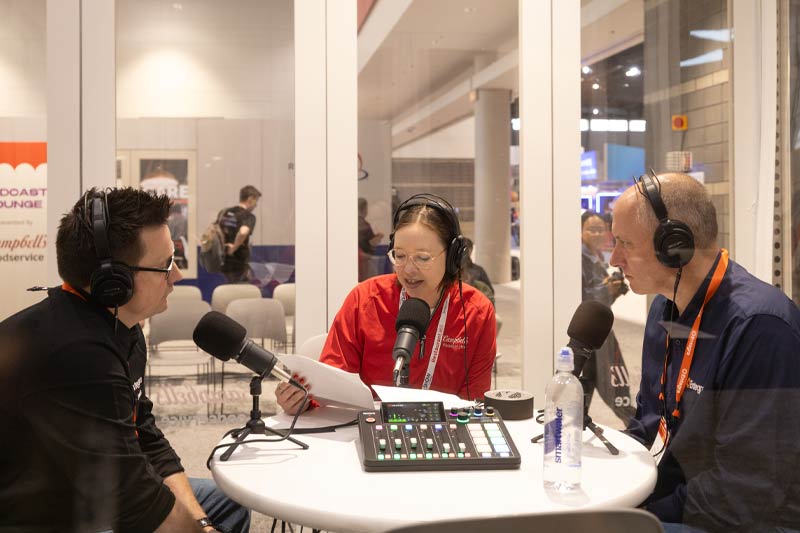
Staying Ahead of the Menu: How Restaurant Operators Can Leverage Culinary Trends Without Breaking the Bank
Chef Kevin Sennett and Kyle Baumann of Entegra Procurement Services break down how culinary strategy and procurement intelligence work together to help restaurant operators capitalize on menu trends without sacrificing margin.
00:00:00,240 –> 00:01:50,100 [Jenna Hagerich]
Thank you for joining live from NRA Campbell’s Culinary Corner. I’m Jenna Hagerich, coming to you from the National Restaurant Association Show, where we’re bringing together industry experts to explore the trends, challenges, and ideas shaping the future of food service. Through these conversations, we aim to connect operators with insights and perspectives that can help inform smarter strategies for what’s next. Today, we’re joined by two leaders from Integra Procurement Services, the world’s largest food GPO, bringing more than fifty billion dollars in purchasing power and procurement solutions to more than seventy-two thousand restaurants. We have Chef Kevin Sennett, Director of Culinary, who brings decades of professional kitchen experience to his work, helping restaurant operators think more strategically about what they put on their menus and how they source it. Chef Kevin sits at the center of Integra’s culinary consulting model, translating trends, supplier partnerships, and menu engineering into real outcomes for operators. And we have Kyle Bowman, National Account Executive for the restaurant segment, who works day in and day out with independent and multi-unit operators to help them get the most out of a full-service procurement partnership. Kyle understands the commercial reality of running a restaurant in twenty-twenty-six and what it actually takes to protect margin without sacrificing the guest experience. We’re in a moment where operators are being asked to innovate constantly while managing costs, leaner teams, and shifting guest expectations. The brands that are winning aren’t the ones chasing every trend. They’re the ones who found a smarter system. That’s exactly what we’re gonna get into today. So Kevin, when you’re talking to restaurant operators right now, what’s the tension they’re describing most? What’s keeping them up at night that maybe wasn’t on the radar even three years ago?
00:01:50,600 –> 00:02:15,260 [Kevin Sennett]
Well, I think the things that are keeping them up at night, I mean, are still the things [chuckling] that were there around three years ago, and that’s rising costs. Um, skilled labor is really the, uh, big challenge. And a lot of the operators that we work with, they’ve got multiple locations. So it’s how do you stay consistent in a brand across those multiple locations? And I think that’s the difficult part with that.
00:02:15,300 –> 00:02:51,820 [Jenna Hagerich]
Integra serves more than seventy-two thousand restaurants and can deliver up to thirty percent savings on purchases compared to supplier list prices. But that savings is just the entry point. The full model includes culinary consulting, the Integra Performance Kitchen, purchasing IQ analytics tools, and an annual trends report covering shifting consumer behaviors, emerging technologies, and evolving market expectations. So Kyle, let’s start with what I think is a real misconception in the market. When you tell a restaurant operator you work for a GPO, what do they assume, and where does that picture fall short of what Integra actually does?
00:02:52,540 –> 00:03:34,260 [Kyle Baumann]
Well, for my clients and across the spectrum for other clients that serve– that are served by Integra, many have GPO experience, have knowledge of it. Some do not. They have zero experience. So there’s misconceptions that it’s gonna cost them money to join the program. This is a, a no-fee program to join. Maybe once they hear some of our benefits and some of our services, that it’s maybe too good to be true, um, that we might enforce specific behaviors from our clients. But the beauty of our program is that we are offering guidance and solutions to challenges that they have, but it’s ultimately their decision-making for their operation to succeed.
00:03:34,980 –> 00:03:47,120 [Jenna Hagerich]
So it sounds like the savings are definitely real, but, um, you’re describing something much bigger than just a discount program. So can you walk us through what a full partnership looks like for a restaurant operator who’s just getting started with Integra?
00:03:47,720 –> 00:04:36,540 [Kyle Baumann]
Yeah, absolutely. So you had mentioned like the multi-faceted approach that Integra brings to our clients from our In- Integra Purchasing IQ data platform, our Chef Kevin and his Integra Culinary Consultant team. There’s also me, you know, as an NAE, National Account Executive, and all the NAEs that are aligned with our clients. I think having myself and, and the dedicated NAE, but there’s also a wealth of knowledge, you know, decades of experience across all of our support teams that bring value and help support and guide our clients to ultimate success. Ultimately, we’re, we’re a business performance improvement company. That’s kind of how we like to look at that.
00:04:37,340 –> 00:04:47,520 [Jenna Hagerich]
So Kevin, you publish an annual trends report. For the operators that are out there listening, what’s the most actionable insight from the report right now? What should they actually do with that type of information?
00:04:48,100 –> 00:05:40,280 [Kevin Sennett]
Well, I think as they read through the trends and what is growing in popularity, I think one of the bigger ones that kind of stands out to me was that immersive guest experience. And I think what is kind of falling away from the food service industry is the guest experience and how does it feel to go into a restaurant. It’s not just about the food, which is fantastic, but it’s the whole environment. When someone walks into your restaurant, you gotta think of it from every aspect, and it’s, it’s how does it feel? How does it look? What’s the sound, the atmosphere? Because when they walk away, that’s that feeling, that food it created inside of them that they’re gonna take with them. So it’s very valuable to look at that, and I think to me, that’s the one trend that really stands out from that full report. But it’s– for any one of them, I would say it’s, it’s looking at the trend and how does it fit your brand and how can you take that and use it to become more beneficial for you.
00:05:41,120 –> 00:06:08,300 [Jenna Hagerich]
Operators feel constant pressure to stay relevant, everything from new proteins to global flavors, functional ingredients, day part expansion. But every new item is a supply chain decision, a labor decision, and a training decision. So Chef Kevin, there’s a difference between a trend that’s generating social media noise and one that’s actually going to drive average check and margins. How do you counsel operators on how to tell the difference between those two things?
00:06:09,084 –> 00:06:55,064 [Kevin Sennett]
I think it’s looking at a trend that it’s the behavior behind the trend. Is it a trend where someone wants to just get their photo taken one time, or they wanna stand in that long line to say that they did it and had that experience? But what’s gonna drive them back to your restaurant consistently? How is that gonna, like, work into your brand as well from a, uh, aspect too? So it’s not just chasing everything that you see on social media, but rather thinking through the process the whole way. And I think that’s one thing that Integra goes beyond that, is really where we get into looking at the logistics of it as well. It’s not just an order guide, it’s distribution, where is it available. ‘Cause if you’re gonna try to make this part of your restaurant and be standard, you gotta be consistent across it. And I think that’s where Integra really has the power behind to do that for them.
00:06:55,744 –> 00:07:00,804 [Jenna Hagerich]
Do you have an example by any chance? Maybe a trend that looked compelling but didn’t make sense operationally?
00:07:01,464 –> 00:07:28,724 [Kevin Sennett]
I think, well, the latest one that is, uh, I’m seeing all over is, is really the chocolate and the Pringles chips and that dessert. And I think it’s fun. You’re gonna do it. You’re gonna waste a lot of money in chocolate and chips, but you gotta look at that trend and, like, what is it that people really enjoy about it? It’s the sweet, it’s the salty mixed together, and that’s the crave-worthiness of that. You gotta lean into that. So how can you use that trend rather than literally serving chocolate and chips on your plate kind of a thing?
00:07:29,724 –> 00:07:40,944 [Jenna Hagerich]
So Kyle, when Kevin or the culinary team brings a trend opportunity to the table, what are your thoughts as far as, like, what questions are you asking from the procurement side before you say, “Let’s go do this”?
00:07:41,564 –> 00:08:38,264 [Kyle Baumann]
Right. Well, Kevin, Chef Kevin kind of hinted at the distribution, the availability. So really kind of if a specific item, line item, and I have relationships with our vendors to really kind of understand what the availability is, sustainability of the product. And then secondarily, you know, I lean into the conversations and relationships with our distribution partners to ensure that the item’s available and what kind of turnaround is it. You know, if a client decides they wanna put something on the menu, they, and they wanna launch an LTO or maybe keep it on their menu, they, they need to know that they have access to that product consistently. So if there’s multiple distribution sources that they can partner with, that’s great. But just as long as we… You know, we wanna be transparent and make sure that they understand and be a consultant to them and make sure they understand the, the logistics and the potential hiccups that could, you know, really thwart their efforts.
00:08:39,224 –> 00:09:00,804 [Jenna Hagerich]
Yeah, absolutely. Trends are great, but if you can’t execute, at the end of the day, I don’t think it’s gonna have the impact that operators are hoping for. So Chef, there’s a concept of building a menu that can absorb trend shifts without being rebuilt every season. Do you have any advice for operators on that? Like, what does that actually look like? Is it a modular approach or a base ingredient strategy?
00:09:01,384 –> 00:09:40,244 [Kevin Sennett]
Yeah, I think it’s, one, it’s knowing your brand. It’s how does it fit into your menu? What is your core moving items on your menu? And then, I mean, the easy solution is building LTOs around that. And so those are the opportunities to really infuse new flavors, to test the waters, have it available, uh, create that fear of missing out opportunity among your guests, and putting it on the menu. And does it hit for a season, or is this gonna become the next big thing that can actually roll into your menu? But it’s being strategic about that, and, and it has to fit your brand, um, for sure.
00:09:41,284 –> 00:10:11,144 [Jenna Hagerich]
Most chefs are trained to engineer a menu around flavor and experience. Integra’s model adds a procurement layer to that process, surfacing data on a total dish cost, spec substitutions, supplier availability, and a category benchmarking. The result is a menu that’s as financially strong as it is guest-worthy. So Chef, what are actually shifts when you add a procurement lens to menu engineering? What are chefs typically not seeing that becomes visible once that data is in the room and available to them?
00:10:11,584 –> 00:11:28,384 [Kevin Sennett]
Really, the, the biggest thing that we look at and one of the sh- uh, that we have access to data-wise is the purchase history of what they’re actually been spending over the years across all locations, and where are chefs spending their money? Where is their efforts and their labor kind of going into? And then how does that translate over to the sales mix of it? Are they moving those products that they’re spending a lot of resources on, a lot of cost with? And so I think that really unveils it. And a lot of times when chefs are in the operation, they’re worried about their menu, the food, opening the door and just serving the food. And, and sometimes you gotta take a step back and look at the big picture and, and understand how is that driving your business, for sure. So to me, it’s, for us, it’s the purchase history is kind of really where we start at. And then by just shifting one item that even if it’s a non-emotional item, if there’s a big savings with it, has a huge impact to a business, for sure. So I think it’s, it’s stopping to kind of take a, a look at it and having someone like Kyle that their whole job is consistently doing that for them so the operator doesn’t have to worry about as much, and they can just take in the information that we can kind of give them and, uh, make the best decisions for their business.
00:11:29,544 –> 00:11:47,784 [Jenna Hagerich]
So Kyle, Integra’s Purchasing IQ tool gives operators visibility into their own spend. So Kyle, Integra’s Purchasing IQ tool gives operators visibility into their own spend. What’s a menu insight that operators typically can’t see without the data layer, but that changes their decisions once they can?
00:11:48,484 –> 00:12:51,624 [Kyle Baumann]
With our Integra Purchasing IQ, they can see… our customers can see their purchase data history, but there’s also a tool on the, on the platform called our Savings Optimizer. And so that really sheds some light and insight into potential items that they’re purchasing that are not on contract that they could shift that’s as good or better than what they’re currently purchasing that is under contract that will save them money and also provide a, a layer of- Of an– of income too with their rebate dollars. So the Integra Purchasing IQ website has that savings optimizer tool, which can provide that insight, but there’s also benchmarking to see how units across their portfolio are performing and way to identify if there’s, you know, outliers that are just not purchasing the correct items according to enterprise spec. So it gives them opportunity to really visualize and see benchmark and highlight opportunities to increase their profitability and earnings potential.
00:12:52,404 –> 00:12:59,804 [Jenna Hagerich]
Tell me more about Integra’s culinary consulting. So what does an operator engagement actually look like, and what do they walk away with?
00:13:00,344 –> 00:14:28,464 [Kevin Sennett]
It’s full solutions for them. Um, it’s an opportunity to, um, step into an environment that’s unbiased because the one thing that we pride ourselves as Integra is just to give you options. We don’t force any operator to go in any one direction. We lay out all the options to them and, uh, get them to understand it’s not just about value of cost, but rather product as well. And so the ECC is the opportunity for them to come into the, our performance kitchen, to sit down at the table, to have vendors, to have our NAEs there to talk through the numbers while trying the foods and have multiple options for that. And so they can really make educated decisions in those moments. And that’s just one part of it. And then the ECC team as a whole becomes an extension of their culinary team. And so we can deliver solutions. We continue to work. So just because you left the EPK, you’re our client. I’m constantly thinking about opportunities. So when a manufacturer such as Campbell’s comes to the table with a new product, a new global flavors, I can then reach back out to the client and say, “Hey, this is a perfect fit for your brand. I think this is something that we can work with. Here’s the, the savings for it.” And, and so it becomes that where the client just gets those solutions, uh, without having to ask, to pay, to– We’re just being part of their team for that. And so anything they need, we’re really, we’re there for them, and it goes beyond just the order guide.
00:14:29,224 –> 00:14:39,444 [Jenna Hagerich]
And Kyle, um, just from your perspective, tell me, you know, as you’re working with operators and engaging with them, like, what does the Integra Culinary Consulting look like, and how does it benefit, um, operator partners?
00:14:40,324 –> 00:15:44,244 [Kyle Baumann]
Yeah. Chef Kevin kind of touched on a few highlighted items, but I– you know, in my mind, the relationship building that stems from the whole experience, like Chef Kevin mentioned, you know, that team will, will think of that client should new products arise, new trends arise, and they’re willing to, you know, share those ideas with the client directly. And then secondarily, the clients themselves, then also we, we build that trust with them, and they, they in turn lean into our partnership and see that value going forward. You know, if they have questions, if they have new ideas, if they have LTO, you know, brainstorming sessions, they wanna engage that team with the ECC and at our facilities and the Integra Performance Kitchen. That becomes, like, like Chef mentioned, an extension of their team, you know, to augment their food service, F&B team, procurement team, anybody involved with any of the decision-making process. It’s really, it’s really so we’re an extension of the team, and that partnership and the, the relationship building at those, at those meetings is really invaluable.
00:15:45,024 –> 00:15:57,504 [Jenna Hagerich]
How about for the independent operator? If there’s anyone out there listening with maybe only three, five, or ten locations, I know a lot of this can feel like it’s really just built for large chains or, or huge operators. What’s your message to them?
00:15:58,144 –> 00:16:16,744 [Kyle Baumann]
Come check us out. I mean, our purchasing power, it offers the, the savings and earnings that the largest chains enjoy, but bringing it to those smaller operations. That’s– And that’s what we wanna provide is that value with the buying power that Integra brings to the table.
00:16:16,744 –> 00:16:31,784 [Kevin Sennett]
If I can, I would say biggest hesitation is, like you said earlier, sometimes it just sounds too good to be true, and there’s nothing to sign up, and you can, you know, take a full advantage of it and just become part of Integra. And so I think that’s– You gotta get beyond that does sound too good to be true.
00:16:31,824 –> 00:17:03,324 [Kyle Baumann]
Yeah. And, you know, oftentimes, even if, you know, if our clients join our program, they start seeing almost accidental savings immediately. Even if they do nothing else, they’ll immediately start seeing savings and earnings. But it’s my job and Kevin’s job to really make sure they maximize the program to bring them the most value without telling them what to do. Again, it’s– they’re all suggestions. They’re all solution opportunities that, um, we just offer with conversations with them and un- un- you know, unveiling the, the points of pain.
00:17:04,264 –> 00:17:09,864 [Jenna Hagerich]
Chef Kevin, what’s one trend on your radar right now that you think most restaurant operators are underestimating?
00:17:10,704 –> 00:17:43,004 [Kevin Sennett]
Um, I think I touched a little bit upon earlier, but it’s, it’s guest experience. I think through all the technology that’s being created, the focus of AI and how can it make kitchens be more efficient, I think it’s fantastic, but it also creates a larger separation between guests and operators and your frontline workers. I mean, they’re one of the most valuable resources, and you’re kind of pulling them away from, from the conversation, and I think there’s opportunity there. So I would say that’s, that’s probably one trend that I would love restaurants to kind of keep that focus on.
00:17:43,464 –> 00:18:10,744 [Jenna Hagerich]
Yeah, absolutely. I think the whole AI dynamic in food service is really interesting, but I think folks have to remember, you know, it’s great if it keeps you closer to the guest or closer to the operator from where I sit. You know, if it saves me time in my day so I can keep focused on that operator and optimizing our products and services for them, I’m all for it. But I think we’re all in food service and hospitality because we love people at the end of the day and serving people, so-
00:18:10,964 –> 00:18:11,624 [Kevin Sennett]
Absolutely.
00:18:11,664 –> 00:18:23,264 [Jenna Hagerich]
Yeah, certainly something to watch and, and hope that operators remember. Kyle, one thing an operator in this room could do this week before they leave the show that would actually move the needle on food cost.
00:18:23,864 –> 00:18:56,044 [Kyle Baumann]
Come by the Integra booth, I think is the number one suggestion. But ultimately, I, I mentioned earlier, the relationships you, you gain amongst all of the, all of your players. You know, I would try to go to as many booths as you can, create those relationships with those vendors. Chances are those vendors are also partners of Integra. And so, you know, once we have or, you know, identify opportunities, those vendor relationships that you grow, you know, which maybe start here, will just continue into the process and the partnership with Integra.
00:18:57,144 –> 00:19:00,244 [Jenna Hagerich]
One metric every restaurant should be tracking that most aren’t.
00:19:00,824 –> 00:19:08,464 [Kevin Sennett]
I would say contribution margin. I think a lot of chefs focus on food cost, labor cost, but it’s contribution margin. It’s what,
00:19:09,544 –> 00:20:15,304 [Kevin Sennett]
what does it take to put that food on the table? How much work goes into that? How much logistics behind it? How oft- uh, how many touch points is it for that one item that hits the menu? And is it your top seller? Because if it’s really not your top seller, um, Kyle and actually were, and I were having a conversation a little bit earlier about this is, perfect example is soups. A lot of times chefs say, “Oh, I, that’s, you know, I make my own soups.” And I said, “That’s great. How much of that is moving the needle? How many are you selling that you’re spending the amount of effort to start from scratch, to, to cut the mirepoix, to build it into it, when your focus could really be on your more profitable items on your menu?” And so there’s opportunity to take a product that’s consistent, has amazing flavors, and doesn’t slow down operations at all. And so I think, uh, it, it’s looking across your whole menu, and we’ve got a few groups that are coming into the kitchen soon, and that’s what they wanna do. They wanna look at their menu and say, you know, “Is it operationally, are we doing the right things? Do we have the right items on the menu, or do we need to take a, take a step back and take a look at it?” And so, um, yeah, I’m excited to, to do that for the clients.
00:20:16,084 –> 00:20:18,944 [Jenna Hagerich]
Speaking of soup, I’ll plug for the Campbell’s Food Service.
00:20:18,944 –> 00:20:19,584 [Kevin Sennett]
That was, yeah.
00:20:19,764 –> 00:20:26,864 [Jenna Hagerich]
Made for chefs by chefs. Kyle, did you wanna answer the one metric every restaurant should be tracking that most aren’t?
00:20:27,504 –> 00:21:01,704 [Kyle Baumann]
I mean, food cost is always number one. I think, you know, waste can be a big driver of, of, of cost. We’ve got partners that will help measure that and streamline that for the operator. Um, it can be very, you know, there’s multiple levels of metrics that they, that this partner can, can monitor and really, you know, ideally shave off, cut down on those waste opportunities. So not always thought about. I don’t think it’s very high level. Mo- mostly food cost, labor, you know, the top ones. So there’s definitely other, other metrics and, and ways to improve your operations that we can help assist.
00:21:02,404 –> 00:21:19,044 [Jenna Hagerich]
Great. Well, I just wanna close with thanking you both so much for spending time with us today. Uh, Chef Kevin and Kyle, really appreciate your participating, sharing your, um, valuable insights. I know it’s gonna help an operator out there make their, uh, operation even a little bit better. So thank you so much. We appreciate it.
00:21:19,244 –> 00:21:19,684 [Kevin Sennett]
Thank you, Jenna.
00:21:19,684 –> 00:21:20,664 [Kyle Baumann]
Thank you. We appreciate.
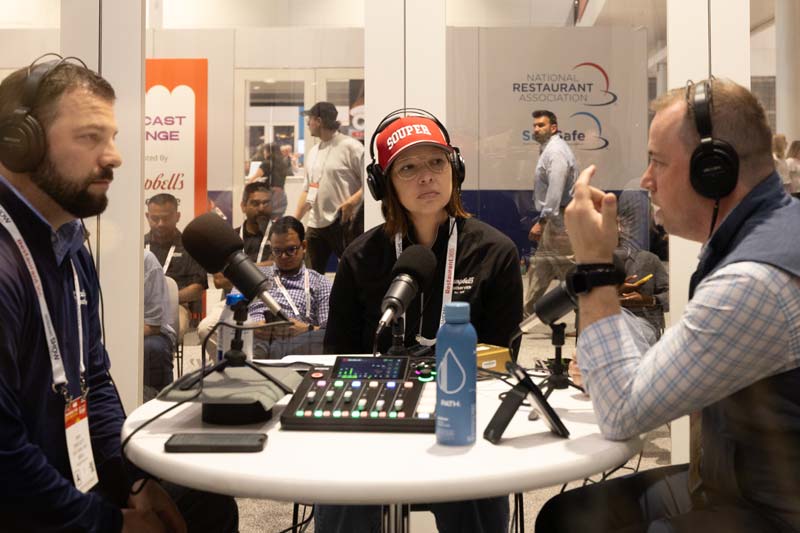
Purchasing Strategy in a Volatile Market: Where Culinary Meets Procurement Intelligence
Chef Simon Seitz and Tom Marlow of Foodbuy explore how operators can build more resilient, high-performing menus by combining culinary insight with smarter procurement strategy in today’s unpredictable market.
00:00:00,560 –> 00:01:04,060 [Jenna Hagerich]
All right. Thank you for joining live from NRA, Campbell’s Culinary Corner. I’m Jenna Hagerich, coming to you from the National Restaurant Association Show, where we’re bringing together industry experts to explore the trends, challenges, and ideas shaping the future of food service. Through these conversations, we aim to connect operators with insights and perspectives that can help inform smarter strategies for what’s next. Today, we’re joined by two leaders from the Buyer’s Edge platform, a team focused on helping food service operators navigate a supply chain that’s getting more complex, more volatile, and more dependent on both data and relationships. We have Kristen Brooks, who brings a strategic operator-facing perspective on what it takes to build stronger supplier relationships and make procurement feel less transactional and more aligned with long-term business goals. And we have Ryan Cox, who brings the analytics and execution lens, helping operators translate data into smarter sourcing decisions, better supplier performance, and more measurable value.
00:01:05,180 –> 00:01:50,100 [Jenna Hagerich]
We’re in a moment where AI and automation are changing how procurement teams work, but not replacing the need for human connection. In fact, the operators who are winning are usually the ones who understand that the best procurement model isn’t just digital, it’s guided. The technology matters, but so does the trust, the follow-through, and the ability to become a customer of choice to distributors and supplier partners. Now, that’s what we’re gonna unpack today, how procurement becomes a strategic engine, not just a buying function. So Kristen, we’ll start with you. Uh, quick question. So when you’re talking with operators right now, what’s the biggest shift you’re seeing in how they’re thinking about procurement, especially as they try to balance cost control with the need for stronger relationships?
00:01:50,460 –> 00:02:29,680 [Kristen Brooks]
I would say we are finding that operators are leaning in heavy on– heavily on their distribution partner and their supplier partner. Um, relationships are at the mo– utmost import-importance right now. Um, we see that through, um, the industry is challenged. Traffic can be challenged in our restaurants, and so delivering on a promise to the consumer is that much more important. So you’ve gotta have the right supplier partners and distributors to deliver on that. Um, so there’s a, a very, very big focus on who do I need in my ecosystem to make sure I can take care of my guest, and that’s really what, what we, uh, tend to assist with in, in a big way.
00:02:30,900 –> 00:02:45,580 [Jenna Hagerich]
Awesome. Thank you so much. Um, definitely wanna continue to build there around why procurement, you know, has to become a partnership. So I guess, Kristen, one more for you. Um, so a lot of food, food service procurement has historically been driven by that bid process-
00:02:45,620 –> 00:02:45,760 [Kristen Brooks]
Mm-hmm
00:02:45,760 –> 00:02:54,860 [Jenna Hagerich]
… and, uh, periodic resets. What does it look like when operators move from that model to true long-term supplier alignment?
00:02:54,860 –> 00:03:40,440 [Kristen Brooks]
It’s, it’s truly a, a partnership. It’s a conversation. It’s understanding and aligning your goals for your, um, business to the supplier’s goals, your distributor’s goals, and being intimately involved with each other to drive out cost out of the system. A lot of times, we spend time with the suppliers talking about what’s working, what’s not working, and what can we do differently as an operator, um, so that that way it’s not– The pricing is a part of the conversation, but it’s not the conversation. It’s all around driving value, and, and value can look different to everybody. We all have different ways of, of operating our businesses. So that’s really where we– what we see is that it becomes a very top-to-top strategic discussion, aligning on goals, long-term plans, and really helping each other grow, which is the key.
00:03:40,900 –> 00:03:51,620 [Jenna Hagerich]
Great. And, uh, Ryan, one for you. So from a data perspective, what’s the hidden cost of staying transactional? So where do operators lose value when they only optimize for price?
00:03:52,160 –> 00:04:38,640 [Ryan Cox]
Yeah. A lot of times when you’re optimizing for price, you’re just looking at individual items instead of looking at categories or suppliers and how can you work with that supplier to make sure that when you are building trucks to get them into your distribution partners, that the trucks are full and you’re not buying pallets or, you know, if something is shorted on, on a single item, um, that’s going to the distribution center. If you’re working and optimizing around the entire category or supplier, you’re gonna see more frequent delivery. So if a, a truck or a pallet is late, it’s, it’s short, it’s not as big of an impact. Whereas if, um, you have, you know, one supplier, one SKU ’cause it’s the lowest price, well, if the pallet doesn’t show up, you have to wait for the next truck to come, and it may be two weeks based on lead time. So a lot of it’s just optimizing, um, around the entire category. So…
00:04:40,300 –> 00:04:48,280 [Jenna Hagerich]
And, uh, to Kristen. So when you talk about being a customer of choice to a distributor or a supplier partner, what does that actually mean in practice?
00:04:49,360 –> 00:06:09,220 [Kristen Brooks]
The first step is building trust. It’s caring about what kind of customer am I to the distributor. What does the distributor need? What do I need? You know, we make jokes about we both sort of sometimes walk away equally unhappy, but that’s sometimes the beauty of a partnership is there are ebbs and flows to a relationship. And so you have to know that you’re both working on those same, um, goals and the KPIs. As a customer of choice to a distributor, you have to understand what are your KPIs? What does your business look like? What’s the profitability of that to the distributor so that it’s not just about stomping my feet and pounding my chest about I need my whatever it is, fill in the blanks. It’s about what do I need to do on my end to be thoughtful on my forecasting, on my planning, to make sure that my suppliers know what I need, the supplier can be successful, as well as the distributor can be successful in delivering the goods. That’s ultimately the goal because we want the consumer to get that dish or whatever it is that they want to enjoy and experience in that restaurant. Um, but it all starts with understanding who we are as an operator, understanding what the distributor needs and what we need, and how do we work together to get there. Doesn’t happen overnight. It’s a long game. It’s not always the short game. Again, not about just the shortest price or the cheapest delivery cost, but how do I wanna build a partnership long-term and make sure that that distributor is fully invested in my business as much as I am.
00:06:10,190 –> 00:06:16,870 [Jenna Hagerich]
And Ryan, what are some of the operational benefits when a supplier sees an operator as a strategic partner rather than just a line item?
00:06:17,410 –> 00:06:59,030 [Ryan Cox]
Yeah, we found that it tends to be that the suppliers are willing to go the extra mile. So if you do have logistic challenges, trucks are late, pallets are shorted, whatever that is, they’re willing to actually problem-solve with you. Um, also, you know, further upstream when you’re building new innovation, when you’re looking at case pack changes, it could be an operational case pack going from, like, bulk to individual case pack, um, sizes. They’re willing to work with you and understand and, and really work through those projects with you versus just saying, “Well, here’s… you know, here’s our product catalog. You kinda gotta pick this.” They’re not… Um, if you’re transactional, they’re not willing to build with that or, you know, when a truck is late, they’re not always willing to, you know, put another truck on the road even if, you know, there, there may be one out there. They’re just more willing to problem-solve with you is what we find.
00:06:59,030 –> 00:07:11,570 [Kristen Brooks]
Suppliers are magical when they are intimate with your business. When you under- when they understand what you are doing, what your goals are, how you wanna grow, they have so many tools in their toolkit. And we… you know, a lot of times you find operators
00:07:12,750 –> 00:07:49,090 [Kristen Brooks]
might be afraid to ask. They don’t know what to ask. They don’t know what’s on the horizon in the innovation with a supplier. So it’s, it’s really critical to have conversations beyond a price sheet as we talk about pricing. Pricing is so important, but the innovation and the things that you can do and drive together when you understand what your goals are, are, are much better. And, and the innovation that’s fast and furious. Um, you know, we always say that suppliers can teach you so much about a category, about a specific segment, about driving traffic, about what’s going on in the industry. They are your education flow, uh, you know, constantly.
00:07:49,670 –> 00:07:59,490 [Jenna Hagerich]
Yeah, I love that. I would say from where I sit, I see that all the time. Like, the, the partnerships that we have that are the strongest are where the operator is leaning on us for that thought leadership.
00:07:59,510 –> 00:07:59,530 [Kristen Brooks]
Mm-hmm.
00:07:59,530 –> 00:08:12,010 [Jenna Hagerich]
They’re leaning on us for that innovation insight onto what’s next because that’s what we’re living and breathing every day. So if we can help them with that… Um, we also are looking at investing a lot in operational support. So, like-
00:08:12,050 –> 00:08:12,050 [Kristen Brooks]
Yes
00:08:12,050 –> 00:08:23,710 [Jenna Hagerich]
… how can we help our operators be the expert in our product so that they feel comfortable, um, and they’re coming back t- again and again so that they’re delivering that, you know, hospitality at the end of the day for, for their customers?
00:08:24,090 –> 00:08:24,270 [Kristen Brooks]
That’s right.
00:08:24,370 –> 00:08:29,410 [Jenna Hagerich]
All right. So let’s talk through some of AI, right? We can’t have this conversation-
00:08:29,410 –> 00:08:29,490 [Kristen Brooks]
[laughs]
00:08:29,490 –> 00:08:52,530 [Jenna Hagerich]
… and not talk ab- about AI. So, um, in an AI-enabled world, uh, tools can surface opportunity faster than ever, but they don’t automatically solve the human side of procurement. So definitely wanna spend some time here. So Ryan, there’s a lot of excitement around procurement tech and AI right now. What problems do these tools solve really well, um, but where do they still fall short?
00:08:53,250 –> 00:09:13,370 [Ryan Cox]
Yeah, the tools are incredible at manipulating data and expediting, you know, any sort of, uh, reports you have to create. They’re great at, you know, looking at contracts, that type of stuff. But at the end of the day, they’re only as good as the, the data that you’re feeding it. So if you put bad data in, you’re gonna get bad data out. So that’s really the biggest challenge right now, is making sure that what you’re feeding it is quality data.
00:09:14,350 –> 00:09:20,090 [Jenna Hagerich]
Yeah, absolutely. I’ve seen that in my own personal journey with AI, right? Um, I think we all have.
00:09:20,090 –> 00:09:21,450 [Kristen Brooks]
Yeah, you can’t always assume it’s right-
00:09:21,450 –> 00:09:21,870 [Jenna Hagerich]
[laughs]
00:09:21,870 –> 00:09:24,110 [Kristen Brooks]
… that it’s smarter than you. It’s not always smarter than you.
00:09:24,190 –> 00:09:36,670 [Jenna Hagerich]
Yeah, absolutely. Um, so Kristen, w- from where you sit, like, where do you see the human layer matter most? Um, for example, like, what can’t be automated when you’re helping an operator improve their procurement performance?
00:09:37,470 –> 00:10:41,290 [Kristen Brooks]
Well, it, it starts with trust. It starts with a relationship. You know, as much as AI is amazing and helps empower our people and our… all of our humans that work on all sides of the business, um, it’s so important to leverage the data and, and the technology and all of the things. But there’s nothing more important than caring about each other’s business. There’s still a heart and a soul to a person, and we get excited about, um… and, and all, all suppliers in the industry get, get excited about the brand. What do you stand for? Who are you? What, what… You still mean something to each other in that interaction. We’re seeing more and more people wanna be together. They wanna break bread together. They wanna talk about business together. We’ve been, you know, here since Thursday with, you know, tons of different supply chain professionals and different organizations all that, you know, help, you know, keep this whole industry what it is today. And it’s all about being together. And so lots of negotiations are happening, um, all over the place, um, but it’s in a, in a way that is much more the, the art, I always say, versus the science behind how we get to a good result for our customer.
00:10:41,810 –> 00:10:48,390 [Jenna Hagerich]
Yeah, I always like to think about it. If, if AI and data can help me spend more time with operators, like, I’m all in.
00:10:48,610 –> 00:10:48,910 [Kristen Brooks]
Exactly.
00:10:48,910 –> 00:10:48,970 [Ryan Cox]
Yep, absolutely.
00:10:48,970 –> 00:10:58,090 [Jenna Hagerich]
Um, but that relationship, that’s so important in understanding what their needs are, what’s gonna make their lives easier. We all know this industry is difficult enough.
00:10:58,130 –> 00:10:58,510 [Kristen Brooks]
Mm-hmm.
00:10:58,510 –> 00:11:07,470 [Jenna Hagerich]
So I’m all in if it’s gonna help me spend more time out there figuring out, like, how we can make better solutions for operators. But to your point, like, that’s why we’re all in hospitality.
00:11:07,510 –> 00:11:09,030 [Kristen Brooks]
Exactly. We still like each other.
00:11:09,050 –> 00:11:10,090 [Jenna Hagerich]
Yeah. We like that human connection.
00:11:10,090 –> 00:11:29,890 [Kristen Brooks]
We’re people. We wanna be connected. Our… uh, we wanna serve, you know, the guests that love to come into our location. So yeah, so it’s a, it’s a big deal. And I think, you know, procurement is just another component of managing a supply chain, but it just ha- it still needs to be fed a relationship, and it still definitely, uh, is not just about the data and the pricing.
00:11:31,330 –> 00:11:42,650 [Jenna Hagerich]
So Ryan, the Buyer’s Edge platform sits at the intersection of analytics and execution. How do you think about bridging that gap, um, between what the data says and what actually gets implemented?
00:11:43,450 –> 00:12:19,178 [Ryan Cox]
Yeah, I mean, I think the data’s… it, it’s an incredible tool, right? And that’s how we see it. It’s a tool that we can use that can point us in the right direction faster, more efficiently, all of that. But at the end of the day, it’s… as we just talked about, we’re in hospitality. It’s still about being together. It’s still about sharing all that. So we can have the best process from our procurement and source the best items on paper, but at the end of the day, we’re still eating food, right? There’s still that element where you still have to go out, eat it, make sure… even if it is a, a match, y- you still have to try it. Does it perform? Does it hold as well? Does it do everything it needs to in the kitchen standpoint, even if in on paper it says it does? You know, baking is, it’s art, not science. So-
00:12:19,358 –> 00:12:19,738 [Kristen Brooks]
Mm-hmm.
00:12:19,838 –> 00:12:27,438 [Ryan Cox]
Um, I-I think that’s a huge piece of it, is we are still in the food service space, and, and the data can only take you so far, but it helps get you there faster.
00:12:28,258 –> 00:13:11,938 [Kristen Brooks]
Yeah, quality is still king in this business, and there’s so much pride. You know, brands are built by founders and, and franchisees that have, you know, given up, mortgaged their homes to build the next location. And so there’s a passion around food. And so, you know, you can’t… That, that piece of it cannot ever be replaced, um, or we hope it can’t be replaced by, you know, the data saying, “This is a product match. The labels look the same. Everything looks perfect.” But they, for however, whatever happens in the kitchen, it doesn’t, doesn’t, it doesn’t translate. It’s not the same. So every product is not created equal. We recognize that, know that, and we wanna continue to, to work towards, um, finding those opportunities, vetting those out, but still making sure quality is, is kept.
00:13:13,538 –> 00:13:23,458 [Jenna Hagerich]
So Kristen, um, what, what happens when teams have the right platform but not the follow-through, or the insight but not the relationships to move things forward?
00:13:23,458 –> 00:14:23,698 [Kristen Brooks]
We talk about this all the time. We are in the relationship business, um, and so you can– you have to show up in a c- a certain way. You’re, as a representative, as an ambassador of your brand, um, and people wanna work with people they like. And so those things are all still very true in this industry. So while data is important and decision-making is critical and all of the things that we work together to do, at the end of the day, um, you, you have to be… You, you cannot go into this without those relationships, without the, the likability, all those things. So a lot of times, we’ll spend time with our clients to get them to that place, that customer choice, the be seen, be seen the right way. Um, but it’s, it’s… If you rely on just transactions and you don’t have a relationship with all of the key stakeholders that support your business, it’s just you’re j- If somebody… We learned that in COVID. If, if someone’s gonna, can only pick up the phone and call one customer, is it gonna be you? You know, and that’s, that’s the way we look at it.
00:14:24,338 –> 00:14:44,118 [Ryan Cox]
Yeah, I would just add one thing. I think part of this goes back to, um, you know, do you have strategic partnerships? If, if you have a platform, no follow-through, you’re probably transactional. And, and the same can be said if you have the insights and not the relationship. It-it’s not a strategic partnership. So not every relationship can be strategic, but, you know, your core business should really strive to get to that level with-
00:14:44,198 –> 00:14:44,318 [Kristen Brooks]
Right
00:14:44,318 –> 00:14:45,998 [Ryan Cox]
… the suppliers that you have.
00:14:46,078 –> 00:14:52,198 [Jenna Hagerich]
All right. Now, let’s talk about value, so how operators can evaluate a true supplier value.
00:14:53,638 –> 00:15:11,498 [Jenna Hagerich]
Um, so we’ve talked a lot about this already, but really talking about how we can get beyond price. So things like service, fill rates, flexibility, responsiveness. Um, so Kristen, if price isn’t the only metric, what should operators actually be evaluating when they’re judging supplier value?
00:15:11,938 –> 00:16:55,558 [Kristen Brooks]
Well, it’s, it’s… We, we joke about this ’cause it’s somewhat obvious, but a price is just a price. If it’s the lowest one, great, but if you can’t get the product, who cares? If you can’t run your operation, who cares? Um, so it’s s-so much more than price. There’s the innovation that happens at the very front side about how you’re bringing that product to market. It’s about can you work as a supplier with the distributor partner to make sure the product is housed in the proper warehouse at the right place at the right time so it shows up on the truck. And so those are all the things that the total value proposition has to be taken into account. Um, there could be things like, um, you know, the value in kind type things that are important to a specific brand that does a lot in their communities, and the suppliers are part of that. Again, you might see some cost built in to something, but if it’s your single most important thing and you’re donating to XYZ organization, if we just looked at it and didn’t look at the total value proposition and assessed a situation, we could make the wrong call to say one supplier is better than the other because we didn’t know about all those other things. We didn’t take all those things into account. So that stuff matters. Um, again, if you’re not a brand that’s a community steward in all the things and you don’t care, then no, it’s, it’s a different, different conversation. But, um, there is a total value proposition that suppliers want to give, they want to deliver. And again, like Ryan was saying, not every situation can be handled that strategically, but your core items, the things that are your center of the plate, the things that matter to your guest, um, that is really where you have to spend your time and ensure that you can have that total cost of ownership of that product and you understand where all the dollars are. And we can break all that down and do that, and that’s when you really know that you’ve hit that nirvana, when you know where every, where every penny is and, and you’re good with it and you’re aligned to that.
00:16:55,578 –> 00:17:06,478 [Jenna Hagerich]
So how can analytics help operators see the difference between just a low price and real performance, especially when service issues or back orders or substitutions start adding costs somewhere else?
00:17:06,838 –> 00:17:51,238 [Ryan Cox]
Yeah. So when you start tracking, like, your, your KPIs with your distributors or your suppliers, your fill rates, your on time, a-all that type of stuff, um, as KB said, lowest prices, it’s just a price. Um, if it’s not showing up, then you are gonna have those things like recovery costs. You’re gonna have to overnight product to stores or, you know, hotshot a truck, do all that type of stuff. So yes, it may be the lowest price when everything goes perfectly, but I think everybody here knows that supply chain is never perfect. There’s always a little bit of a state of chaos. So, um, when you’re just targeting price, I think you lose sight of the bigger picture, and it’s, it just really… Uh, the data can help, uh, identify the trends for you on, on where people are… You can identify them as they start to dip before it becomes catastrophic by using and tracking the data on the KPIs from your distributors and suppliers.
00:17:51,738 –> 00:18:03,058 [Jenna Hagerich]
All right. So, uh, definitely wanna get into where Buyer’s Edge is bridging the gap. Ryan, can you walk us through what it looks like when the Buyer’s Edge platform steps in and helps an operator turn data into action?
00:18:03,358 –> 00:18:54,388 [Ryan Cox]
Yeah. So the beauty of the platform is we can ingest data, you know, through various EDI feeds and whatnot and normalize it so that if you’re using multiple distributors, it’s all the same format. So you can really start to look at it, understand your inventory, understand your lead times, all of that, but it’s all in the same format. You don’t have to go and try to manipulate seven different spreadsheets. And then we can tie all that data to various markets. So let’s say, um, you’re looking at bread and you wanna know how the wheat market is tracking versus this. We can pull in all of our forecasting data as well and, you know, give you your projections and, and do the whole pricing and also determine, you know, true cost as well. We could track it over time. Hey, we’ve had these issues in the past with the supplier. Maybe there’s been shorts or late trucks or whatnot. We can pull that data in, or we can add it, and then you can start to say, “Hey, here’s your true cost. It may be lowest price, but here’s your true cost versus what maybe an alternate bid was.” You know, and you can say, “Well, true cost is the lowest price wasn’t the lowest price.”
00:18:55,428 –> 00:19:33,028 [Kristen Brooks]
I just would add on too that within the platform while we are as, you know, tech-forward, data-driven, all the things, we don’t just dump the data to you, um, as an end user. We are a service-based organization, so there’s lots of parts within the platform that come with– the technology comes with people to help you, you know, ingest that data to do what– to know what to do with that data. Um, and so what I– one of the things I love about, about Buyer’s Edge is there’s lots of people that are really passionate about the food service industry. Uh, and so we, we know how to use technology to our advantage and then bring results to our customers that use us.
00:19:33,348 –> 00:19:43,328 [Jenna Hagerich]
Ryan, can you share an example? So maybe a real-world intervention where the team helped drive measurable savings or improve supplier per-performance beyond what the operator was getting on their own?
00:19:43,948 –> 00:20:40,068 [Ryan Cox]
Yeah. So we work with a brand. I obviously will not mention said brand, um, but we were working with them. And in one of their core items, we had gotten a price and, and we had gotten an increase, and we knew that the market that that, you know, item was based on was either flat to down. So we kind of started digging into it and saying, “Okay, how is this– how are we getting an increase right now?” Or, “How is the pricing holding flat when we’ve just seen this commodity market dip?” So is what we did is we were able to take that data, compare it to the commodity markets, go back to the supplier and say, “Hey, I think you guys need to take another look at this because based on the commodity data that we’re seeing, we should be getting a decrease right now.” So, um, that specific brand doesn’t have any sort of internal supply chain. We operate as their supply chain, so we were able to push back. And I don’t remember what the annualized number was, but it was money they would have never got. They would have never pushed back. Um, so just by presenting the, the forecasting data and the market data that was out there, we were able to say, “Hey, I think you guys need to, to double-check your work.” And, you know, we were able to achieve so- achieve some cost savings.
00:20:40,648 –> 00:20:52,168 [Jenna Hagerich]
All right, Kristen, so we’ve talked a lot about trust and dependability and relationships. So when a relationship is working well, what does that mean for both sides, the operator and the supplier partner?
00:20:52,268 –> 00:22:37,548 [Kristen Brooks]
I think what, what it means for both sides is that each party is making good on the commitments that they signed up for. So we talk about KPIs a lot, right? For the distributor, the distributor needs a certain dollar amount to stop a truck. They need to see commitments made, whether whatever it– that those commitments are to be showing up on a truck. And so when we track those KPIs, we understand how we are delivering on a promise as an operator. Are we making good on the commitments that the distributor was under the, under the assumption when they gave that pricing? So that, that’s a big one for a distributor is, are they a profitable account? Are they making money? We all are in this business to make money. Um, so we need to have– it needs to be a healthy partnership with give and take. So that, that’s really how the distributor is, is happy, is, is it a profitable account, and do they feel good about what they’re doing? As a– as being on the operator side, we just have to always be honest with ourselves that we know what we are signing up for. We know what we’re asking our supplier community for. We know what we’re asking our distributors for, and are we delivering on those? And if we’re not, it’s actually okay. It’s a conversation to figure out together, how do we get to the other side? If traffic is down, it’s not just down in one location in your restaurant. It’s, it’s sometimes an industry problem, right, or it’s a segment problem. But how do we solve those things together, and what are the things that we can do to support each other? Sometimes it’s short-term price increases. Sometimes it’s something, something else. There’s all different ways to, to maneuver around it. But if we all just said, even in the crisis right now with fuel and things like that, “Well, we’re just not taking price,” and then, you know, the whole, the whole ecosystem would get stuck because we’d all be at a stalemate. So we have to work together to understand this is temporary, understand how we’re gonna get through it, partner together, figure out where the pain points are. Um, but that’s what it really looks like when it, when it’s humming in the right manner and working in the right direction.
00:22:38,228 –> 00:22:45,528 [Jenna Hagerich]
Ryan, if you look ahead, what does the future of guided procurement look like as more tools, more data, and even more AI enter the market?
00:22:46,028 –> 00:22:55,947 [Ryan Cox]
I mean, I think there, there’s two pieces. Um, first is I think transparency becomes much easier when you can just point to the data and say, “Well, it’s– data doesn’t have feelings.” Um, you can– as long as it’s good data.
00:22:55,947 –> 00:22:56,868 [Kristen Brooks]
[laughs]
00:22:56,887 –> 00:23:24,248 [Ryan Cox]
Uh, I think that becomes transparency and, and just kind of looking at it, it’s less not argumentative, but there’s less back and forth on, on what a price should be. But I think it’ll allow the teams also to become more efficient, and then they can build stronger relationships. Because if you can be here at the NRA show building relationships instead of at home dealing with inventory reports or chasing that kind of stuff, I think it, you know, you build the stronger relationships. It lets you get to a more strategic level. So I think it allows teams to be more efficient, um, while also providing more transparency-
00:23:24,388 –> 00:23:24,488 [Kristen Brooks]
Mm-hmm
00:23:24,488 –> 00:23:25,988 [Ryan Cox]
… you know, throughout the entire supply chain.
00:23:26,608 –> 00:23:29,848 [Jenna Hagerich]
Yeah, it gives people information so that they know exactly where to focus.
00:23:29,848 –> 00:23:30,568 [Ryan Cox]
Yes, correct.
00:23:30,608 –> 00:23:30,848 [Kristen Brooks]
Mm-hmm.
00:23:30,988 –> 00:23:41,988 [Jenna Hagerich]
Good. All right, we’re gonna get into some rapid-fire questions, and we’ll close up. So Ryan, this one’s for you. One metric every operator should watch that most teams don’t track closely enough.
00:23:42,408 –> 00:23:43,948 [Ryan Cox]
Distributor brand percentage.
00:23:44,008 –> 00:23:51,328 [Kristen Brooks]
That was a good one. [laughs] That’s definitely one. Delivery time windows, like the time that the trucks get delivered.
00:23:51,888 –> 00:23:52,788 [Ryan Cox]
Like if they’re on time, they-
00:23:52,788 –> 00:23:53,668 [Kristen Brooks]
If they’re on time.
00:23:53,708 –> 00:23:56,348 [Ryan Cox]
Anything like that. Did they arrive in the middle of your lunch rush?
00:23:57,308 –> 00:24:01,328 [Jenna Hagerich]
Love that one. I’ve definitely been the person tasked with unloading a truck during the lunch rush-
00:24:01,328 –> 00:24:01,448 [Kristen Brooks]
[laughs]
00:24:01,448 –> 00:24:03,728 [Jenna Hagerich]
… back in my early days of food service.
00:24:03,728 –> 00:24:04,428 [Kristen Brooks]
Favorite thing.
00:24:05,568 –> 00:24:06,748 [Jenna Hagerich]
Maybe pride in the walk-in.
00:24:06,808 –> 00:24:06,908 [Kristen Brooks]
Yeah.
00:24:06,948 –> 00:24:13,948 [Jenna Hagerich]
Don’t need to talk about it. Um, all right, Kristen, one thing an operator can do this week to become a better customer of choice.
00:24:13,948 –> 00:24:49,232 [Kristen Brooks]
Educate themselves. Continue to… You know, I always say suck everybody’s brains dry. The supplier, um, when they’re here on this floor and they’re seeing all of the innovation that exists, asking questions, um, you know, leaning in on the suppliers or the people in, in the industry that are, are working so hard to, um, to, you know, continue to grow. So I would just say educate, educate, educate. That’s all you– I think that’s really what AI and data and all these things are doing for us, is we’re getting educated faster. Um, and so spending time and listening is key when we’re at these types of events and things like that.
00:24:50,212 –> 00:24:54,312 [Jenna Hagerich]
One misconception about AI in procurement that you wish more operators understood.
00:24:55,572 –> 00:24:56,972 [Ryan Cox]
Uh, from an AI, it’s always right.
00:24:58,172 –> 00:25:08,792 [Ryan Cox]
I think, you know, everyone assumes because it’s, it’s so smart and fast and efficient that it’s always right. But I know just in my own dabbling around in AI and whatnot, you’ll get answers and you’re like, “That’s, that’s definitely not right.”
00:25:08,792 –> 00:25:10,132 [Kristen Brooks]
Definitely not right. [laughs]
00:25:10,132 –> 00:25:18,092 [Ryan Cox]
So, um, I think a lot of people just assume it is correct. And, and, you know, if you just take two seconds and say, “Hmm,” you, you know, save yourself a lot of trouble, uh, down the road.
00:25:18,632 –> 00:25:21,072 [Kristen Brooks]
Trust yourself. [laughs] Know that you’re smart.
00:25:21,652 –> 00:25:27,552 [Jenna Hagerich]
All right, we’ll do this one for each of you. So one word you’d use to describe the future of procurement.
00:25:28,432 –> 00:26:02,992 [Ryan Cox]
I would just say it’s exciting. I mean, the, the more access to data, I think, you know, when I actually worked at one of our sister brands here, I always talked about the end-to-end supply chain. Could I ever have visibility up and down the supply chain from the store to the supplier? Still a long way to go, but I think that could be a reality now where you can start to see that, hey, if I’ve sold a hamburger, what that case yield is, and it could flow all the way to the supplier in terms of production planning. So just that whole data transparency and having it flow throughout the system I think makes all of our, our jobs easier. So I’m really excited to see kind of what all this new, um, AI and whatnot can do for us.
00:26:03,392 –> 00:26:43,292 [Kristen Brooks]
I always use the word fun. It is so fun to solve problems that are complex and, um, and the things that get thrown at us in this industry. It is just a complete joy to accomplish things for operators and know that how much everyone deeply cares for each other. So I love this industry. I’m excited about the future. Um, while I know we will have challenges, and we always have challenges, the one thing I say about operators is they always find a way. They have this crazy passion for, “Oh, you say can’t get it done? I’ll find a way.” And I love being attached to those types of people, and winning is fun. And so I think our industry is, is definitely a winner.
00:26:44,052 –> 00:26:45,252 [Jenna Hagerich]
Yes, resiliency.
00:26:45,692 –> 00:26:46,212 [Kristen Brooks]
Amazing.
00:26:47,552 –> 00:27:06,032 [Jenna Hagerich]
All right. Well, that wraps up our session. Uh, I just wanna take a second to thank both of you so much for participating. I think operators and other attendees of the show are gonna really learn a lot, um, just from this little bit of time that we got to spend together. So thank you for being great partners and for participating and spending this time with me. I really appreciate it.
00:27:06,332 –> 00:27:07,252 [Ryan Cox]
Thank you for having us.
00:27:07,732 –> 00:27:08,212 [Kristen Brooks]
It was awesome.